








When choosing Roman shades, one of the most important decisions is whether you want blackout or light filtering fabric. Both options offer the soft, tailored look Roman shades are known for, but they perform very differently when it comes to light control, privacy, and room function.
Blackout Roman shades are designed to reduce as much incoming light as possible, while light filtering Roman shades soften sunlight and create a brighter, more open feel. The best choice depends on how you use the room and how much privacy and darkness you need.
Browse our collection of custom Roman shades to explore available fabrics, colors, and light control options. Upgrade your space with our collection of high-quality window shades available in modern designs.
What Is the Difference Between Blackout and Light Filtering Roman Shades?
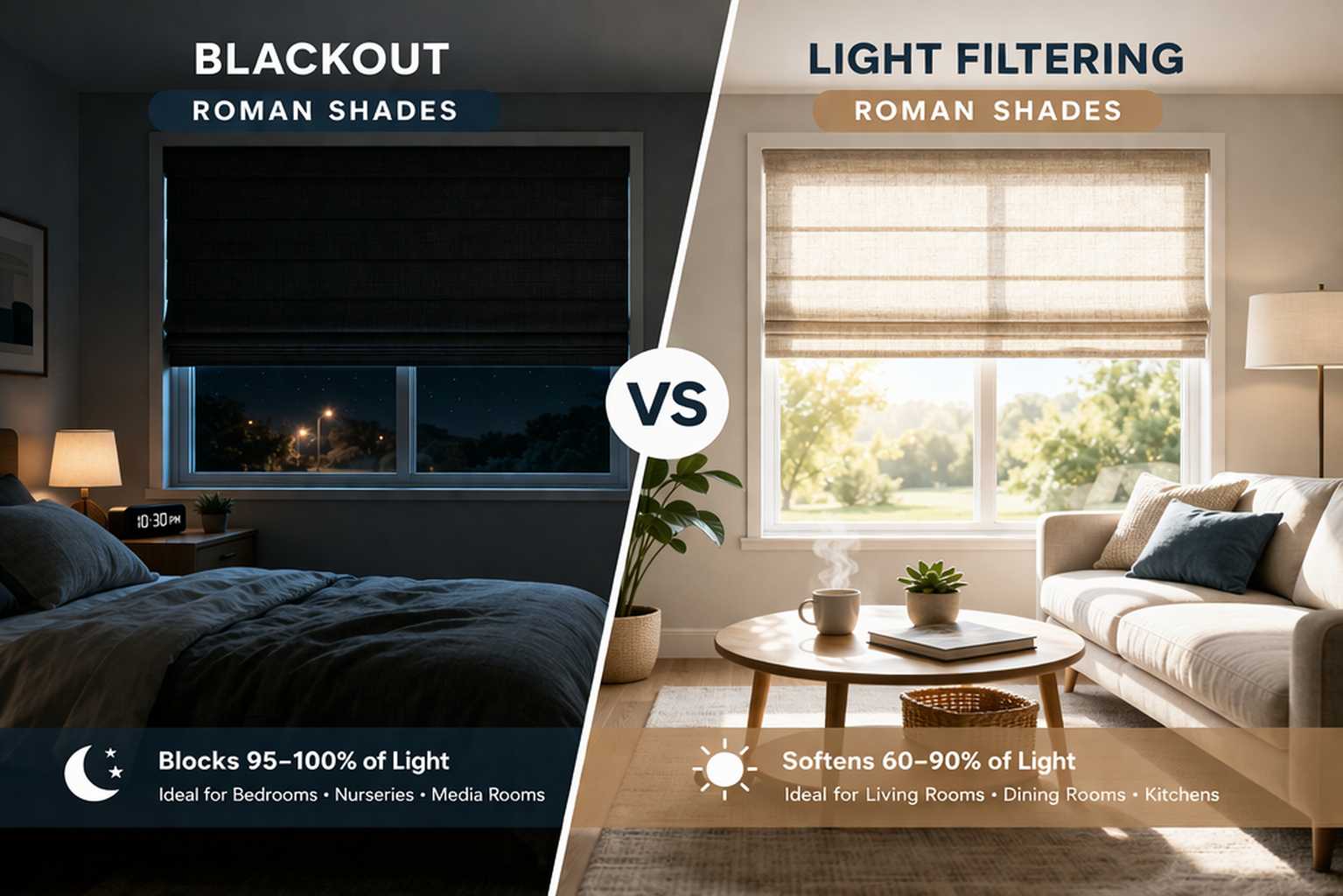
The main difference between blackout and light filtering Roman shades is how much light they allow into the room. Blackout Roman shades are made to block most incoming light, while light filtering Roman shades allow softened natural light to pass through the fabric.
Both options can look similar from a design standpoint, but they create very different results in everyday use.
What Are Blackout Roman Shades?
Blackout Roman shades are designed for rooms where strong light control and privacy are important. They use blackout material or a blackout liner to help reduce outside light and create a darker, more private space.
These shades are often chosen for bedrooms, nurseries, and media rooms where sleeping, resting, or screen viewing is a priority.
Benefits of Blackout Roman Shades
- Blocks most incoming light: Helps create a darker room
- Improves privacy: Limits visibility from outside
- Good for bedrooms: Helps support better sleep conditions
- Reduces glare: Useful in media rooms and spaces with screens
What Are Light Filtering Roman Shades?
Light filtering Roman shades are designed to soften and diffuse sunlight rather than block it completely. They help reduce harsh glare while still allowing natural light to brighten the room.
These shades are often used in living rooms, dining rooms, kitchens, and other spaces where maintaining a bright, welcoming feel is important.
Benefits of Light Filtering Roman Shades
- Lets in natural light: Keeps rooms bright and open
- Softens sunlight: Reduces harsh glare without darkening the room
- Adds warmth to the space: Creates a softer ambiance
- Works well in shared living areas: Ideal for rooms used throughout the day
Blackout vs Light Filtering Roman Shades for Privacy
If privacy is your main concern, blackout Roman shades generally provide more coverage than light filtering options. Because blackout fabrics and liners are denser, they reduce visibility more effectively, especially at night.
Light filtering Roman shades can still provide privacy, but they usually allow more light through and may not offer the same level of coverage in darker conditions or when interior lights are on.
Blackout vs Light Filtering Roman Shades for Bedrooms
For bedrooms, blackout Roman shades are usually the better choice. They help reduce outside light from streetlights, early morning sun, and other sources that can interfere with sleep.
Light filtering Roman shades may still work in bedrooms if you prefer a softer morning glow, but they are generally better suited to rooms where full darkness is not essential.
Blackout vs Light Filtering Roman Shades for Living Rooms
For living rooms, light filtering Roman shades are often the more popular option. They allow natural light into the room while still softening glare and adding privacy.
Blackout Roman shades can work in living rooms too, especially if the room gets intense sun or is used for television viewing, but they create a darker and more closed-in feel when fully lowered. Learn more about which rooms are best for Roman shades?
How to Choose Between Blackout and Light Filtering Roman Shades
The best choice depends on how you want the room to feel and function.
- Choose blackout Roman shades if: You want maximum light control, stronger privacy, and a darker room
- Choose light filtering Roman shades if: You want soft daylight, a brighter room, and a more open atmosphere
If you are still deciding, think about how the room is used most often. Bedrooms and nurseries usually benefit from blackout options, while living rooms and dining rooms often work better with light filtering fabrics.
Are Blackout Roman Shades Worth It?
Blackout Roman shades are often worth it for rooms where sleep, privacy, or glare reduction matter most. They can make a big difference in bedrooms and other spaces where stronger light control is needed.
Are Light Filtering Roman Shades Worth It?
Light filtering Roman shades are often worth it for spaces where you want privacy without losing the benefits of natural light. They are a strong choice for rooms that need softness and brightness rather than darkness.
Which Roman Shade Option Is Best?
There is no single best option for every room. Blackout Roman shades are better for stronger privacy and darkness, while light filtering Roman shades are better for soft daylight and a brighter, more open feel.
The right choice comes down to how much light you want, how much privacy you need, and how you use the space every day.
Learn More About Roman Shades
- How to Choose Roman Shades
- Pros and Cons of Roman Shades
- Are Roman Shades Worth It?
- What Are Roman Shades?
Frequently Asked Questions About Blackout vs Light Filtering Roman Shades
Are blackout Roman shades better than light filtering Roman shades?
Do light filtering Roman shades provide privacy?
Are blackout Roman shades good for bedrooms?
Are light filtering Roman shades good for living rooms?
How do I choose between blackout and light filtering Roman shades?
Discover how fabric window treatments can transform a room by browsing our custom Roman window shades eaturing a wide range of colors, textures, and fold styles.
Need help deciding? Explore our Roman shades buying guides and expert advice for tips, comparisons, and design ideas.