









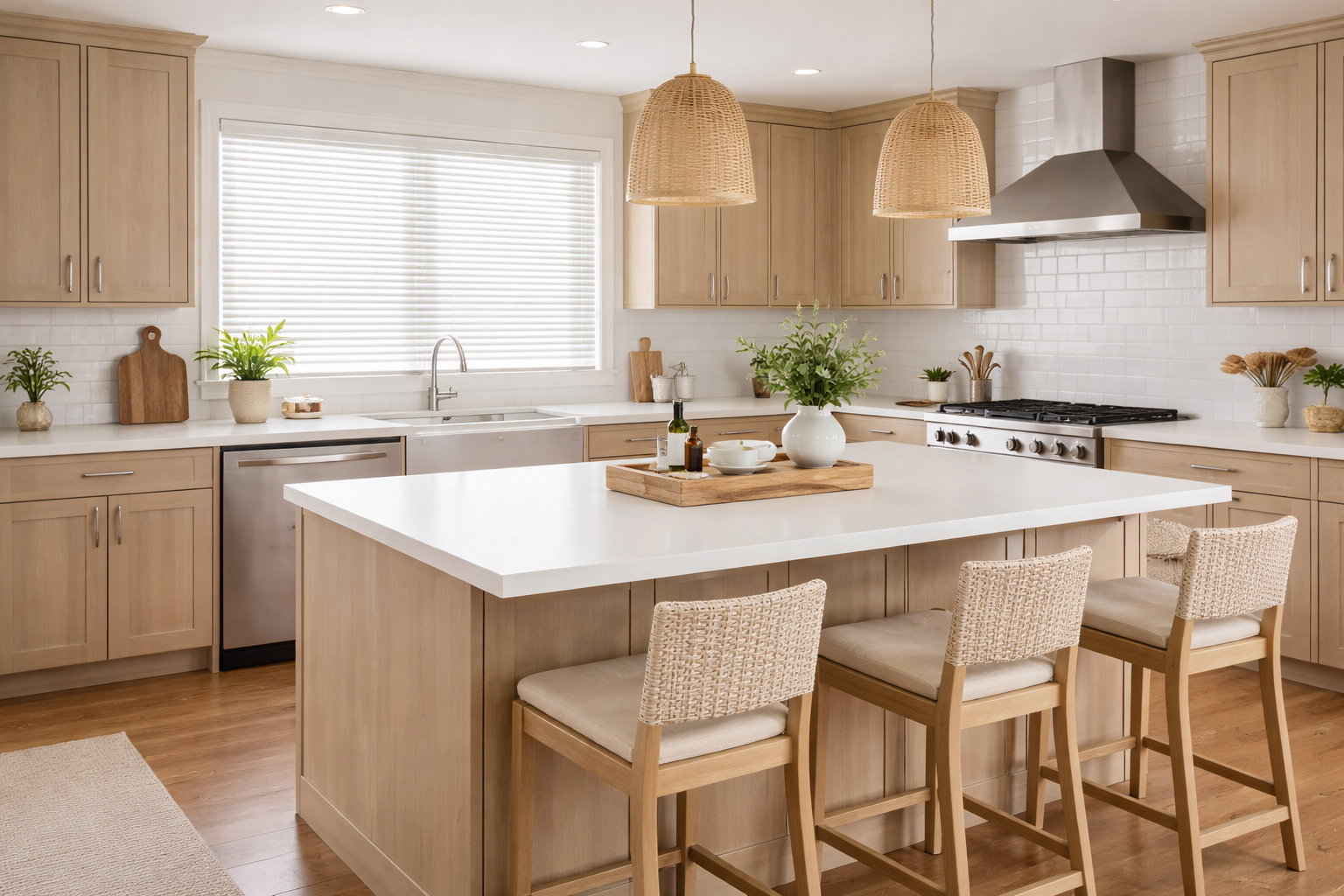
Aluminum mini blinds and faux wood blinds are two of the most popular horizontal window treatments, but they serve different purposes depending on your needs, style, and budget. Understanding how they compare can help you choose the right option for your space.
Both options offer adjustable slats for light control and privacy, but they differ in material, appearance, durability, and overall feel. This guide breaks down the key differences so you can decide which is the better fit for your home.
You can browse both options here: Aluminum Mini Blinds and Faux Wood Blinds. Find the perfect match with our assortment of window blinds for every décor.
Key Differences at a Glance
- Material: Aluminum mini blinds use metal slats, while faux wood blinds use composite or PVC materials.
- Appearance: Faux wood blinds offer a thicker, wood-like look, while aluminum blinds are slimmer and more minimal.
- Weight: Aluminum blinds are lightweight; faux wood blinds are heavier.
- Cost: Aluminum mini blinds are typically more affordable.
- Style: Faux wood blinds feel more decorative, while aluminum blinds are more functional.
Appearance and Style
Faux wood blinds are designed to mimic the look of real wood, with thicker slats and a more substantial visual presence. They are often chosen for living rooms, bedrooms, and other spaces where appearance plays a bigger role.
Aluminum mini blinds have a slimmer profile and a more streamlined look. They work well in modern, functional, or utility-focused spaces where simplicity and practicality are priorities.
Durability and Everyday Use
Both options are durable, but they perform differently depending on the environment. Aluminum mini blinds are lightweight and practical for everyday use, while faux wood blinds are thicker and more resistant to wear in high-use areas.
Faux wood blinds are often chosen for their sturdy construction, while aluminum blinds are valued for their simplicity and ease of operation.
Moisture Resistance
Faux wood blinds are commonly used in kitchens and bathrooms because they are designed to handle humidity well. Aluminum mini blinds also perform reliably in these environments, making both options suitable for moisture-prone areas.
Light Control and Privacy
Both aluminum mini blinds and faux wood blinds provide adjustable light control through tilting slats. This allows you to manage brightness and privacy throughout the day.
Learn more about performance: Light Control for Aluminum Mini Blinds
Cost and Value
Aluminum mini blinds are typically the more budget-friendly option, making them ideal for covering multiple windows or outfitting rental properties.
Faux wood blinds are usually more expensive but offer a thicker, more traditional look that some homeowners prefer for design-focused spaces.
Which One Should You Choose?
Choose Aluminum Mini Blinds If:
- You want a more affordable option
- You prefer a lightweight, easy-to-use blind
- You are covering utility spaces, offices, or rental properties
- You want a simple, low-profile look
Choose Faux Wood Blinds If:
- You want a wood-look appearance
- You prefer a thicker, more decorative blind
- You are designing a living room or bedroom
- You want a more traditional or upscale style
Explore Your Options
Ready to compare products? Browse our affordable aluminum mini blinds and quality faux wood blinds collections.
You can also explore:
- Best Selling Aluminum Mini Blinds
- Highest Rated Aluminum Mini Blinds
- Best Selling Faux Wood Blinds
- Highest Rated Faux Wood Blinds
- How to Clean Aluminum Mini Blinds
Final Thoughts
Aluminum mini blinds and faux wood blinds both offer practical solutions for light control and privacy, but they serve different priorities. Aluminum blinds are ideal for affordability and simplicity, while faux wood blinds provide a more decorative, wood-like appearance.
Choosing between them comes down to your budget, style preferences, and how you plan to use the space.
Aluminum Mini Blinds vs Faux Wood Blinds FAQs
Are faux wood blinds better than aluminum mini blinds?
Faux wood blinds are better for a more decorative, wood-like appearance, while aluminum mini blinds are better for affordability and a lightweight, practical design.
Which is more affordable: aluminum or faux wood blinds?
Aluminum mini blinds are typically more affordable than faux wood blinds, making them a popular choice for budget-conscious projects or multiple windows.
Which blinds are better for bathrooms and kitchens?
Both aluminum mini blinds and faux wood blinds work well in bathrooms and kitchens because they handle moisture effectively and are easy to maintain.
Do aluminum mini blinds last as long as faux wood blinds?
Both options are durable, but faux wood blinds are generally thicker and more resistant to wear, while aluminum blinds are lighter and easier to operate.
Which looks better: aluminum or faux wood blinds?
Faux wood blinds typically have a more traditional and decorative look, while aluminum mini blinds offer a clean, minimal, and functional appearance.
Shop our collection of alternative wood blinds to discover durable window treatments designed for light control, privacy, and everyday use.
For more information, visit our faux wood blinds expert advice hub, where you’ll find in-depth guides and expert advice.