








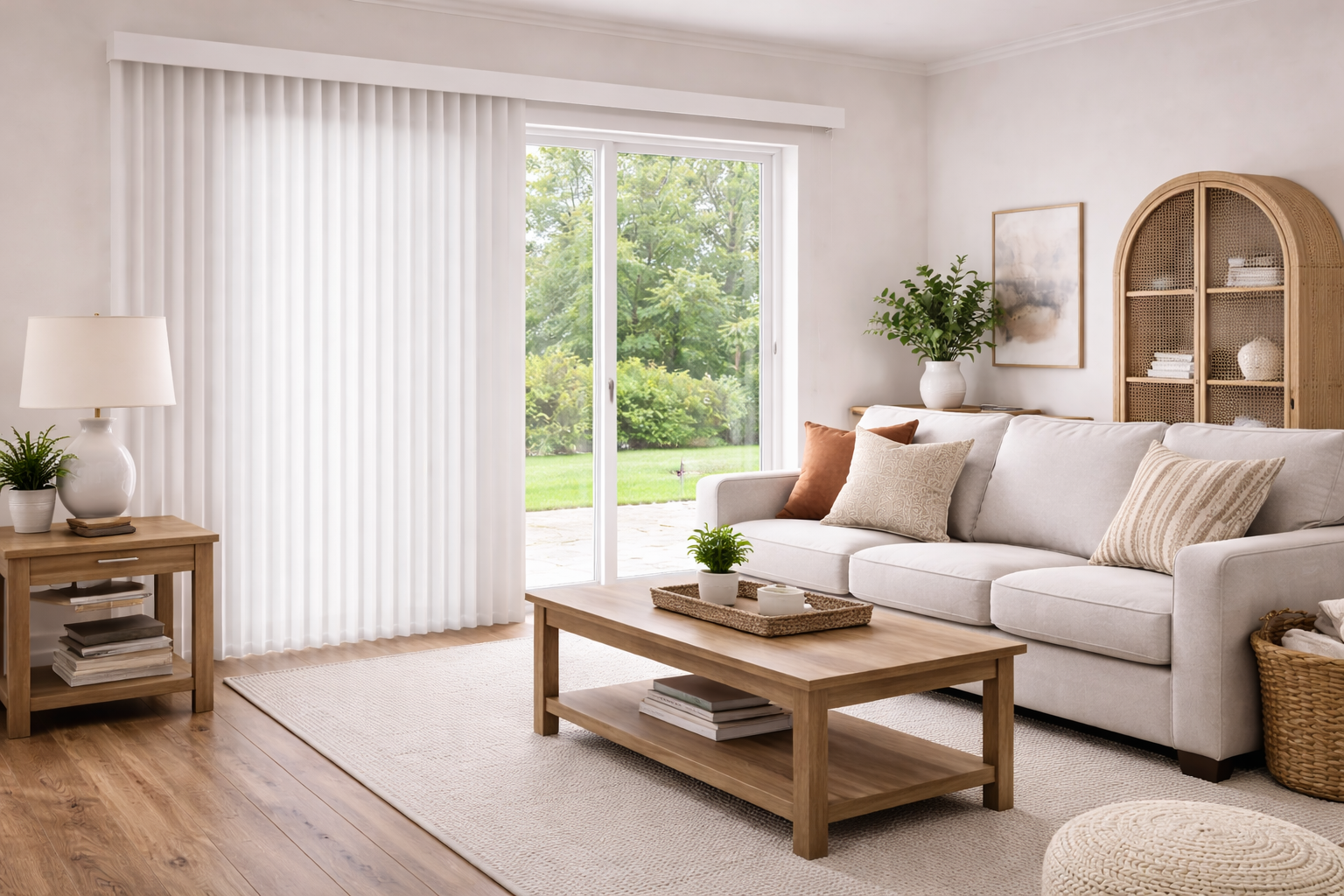
Vertical blinds are a popular window treatment, especially for large windows and sliding glass doors. They offer practical light control and a clean, functional design, but like any window covering, they come with both advantages and disadvantages.
Understanding the pros and cons of vertical blinds can help you decide whether they are the right fit for your home. If you’re still learning the basics, start here: What Are Vertical Blinds? Browse our full collection of custom window blinds designed to fit any space.
Pros of Vertical Blinds
1. Ideal for Large Windows and Sliding Doors
Vertical blinds are specifically designed to cover wide openings. Their side-to-side operation makes them easy to use on sliding glass doors and large windows where horizontal blinds may be less practical.
2. Flexible Light Control
The adjustable vanes allow you to control light throughout the day. You can tilt them to reduce glare, block direct sunlight, or let in natural light while maintaining privacy.
Learn more: Benefits of Vertical Blinds
3. Easy to Maintain
Vertical blinds are relatively low maintenance. Because the vanes hang vertically, they tend to collect less dust than horizontal blinds, making them easier to clean in many cases.
4. Durable for Everyday Use
Many vertical blinds are made from materials such as vinyl, fabric, or composite options that are designed for long-term use. They perform well in high-traffic areas and everyday environments.
5. Good Privacy Control
By adjusting the angle of the vanes, you can manage visibility from outside while still allowing light into the room. This makes vertical blinds a practical option for street-facing windows and shared spaces.
6. Cost-Effective for Large Openings
Covering large windows or sliding doors can be expensive with some window treatments. Vertical blinds are often a more affordable solution for these wide areas.
Cons of Vertical Blinds
1. More Functional Than Decorative
Vertical blinds tend to have a clean and practical appearance, but they may not offer the same softness or decorative feel as fabric-based window treatments like Roman shades or drapery.
2. Can Make Noise When Moving
The vanes can move or make slight noise when opening, closing, or when exposed to airflow from open windows or vents.
3. Gaps Between Vanes
Even when closed, small gaps between vanes may allow some light to pass through. While they provide good light control, they are not typically designed for full blackout conditions.
4. Not Ideal for Small Windows
Vertical blinds are best suited for large openings. On smaller windows, they may feel oversized or less visually balanced compared to horizontal blinds or shades.
5. May Feel Less Modern in Some Spaces
While they work well in many settings, some homeowners prefer other window treatments for more contemporary or design-focused interiors.
Are Vertical Blinds Right for You?
Vertical blinds are a strong choice if you need an affordable, practical solution for large windows or sliding doors. They offer flexible light control, durability, and ease of use in everyday spaces.
However, they may not be the best option if your priority is a softer, more decorative look or a window treatment designed for smaller windows.
Explore Vertical Blinds
Ready to browse options? Visit our complete selection of custom made vertical blinds to compare styles and materials.
You can also explore:
Final Thoughts
Vertical blinds offer a practical balance of affordability, durability, and light control, especially for large windows and sliding doors. By understanding both the pros and cons, you can make a more informed decision about whether they are the right fit for your home.
Pros and Cons of Vertical Blinds FAQs
What are the main pros of vertical blinds?
The main pros of vertical blinds include strong light control, durability, easy maintenance, and suitability for large windows and sliding doors.
What are the disadvantages of vertical blinds?
The main disadvantages include a more functional appearance, potential noise from moving vanes, and light gaps between slats when closed.
Are vertical blinds good for sliding doors?
Yes. Vertical blinds are one of the best options for sliding glass doors because they are designed to cover wide openings and operate side to side.
Do vertical blinds block light completely?
Vertical blinds provide good light control, but small gaps between vanes may allow some light to pass through, so they are not typically blackout.
Are vertical blinds still a good option today?
Yes. Vertical blinds remain a practical and widely used window treatment, especially for large windows and sliding doors where functionality is important.
Browse our selection of selection of vertical blinds to discover versatile window coverings designed for light control, privacy, and easy operation.
Still deciding? Check out our vertical blinds buying guides to help you choose with confidence.