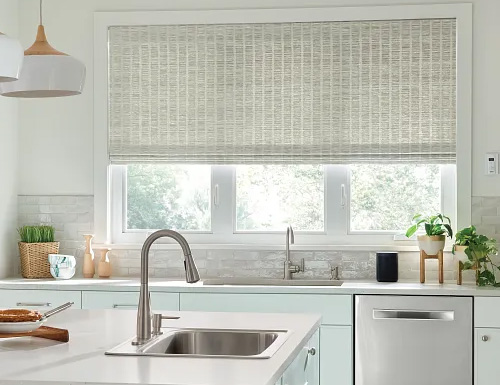









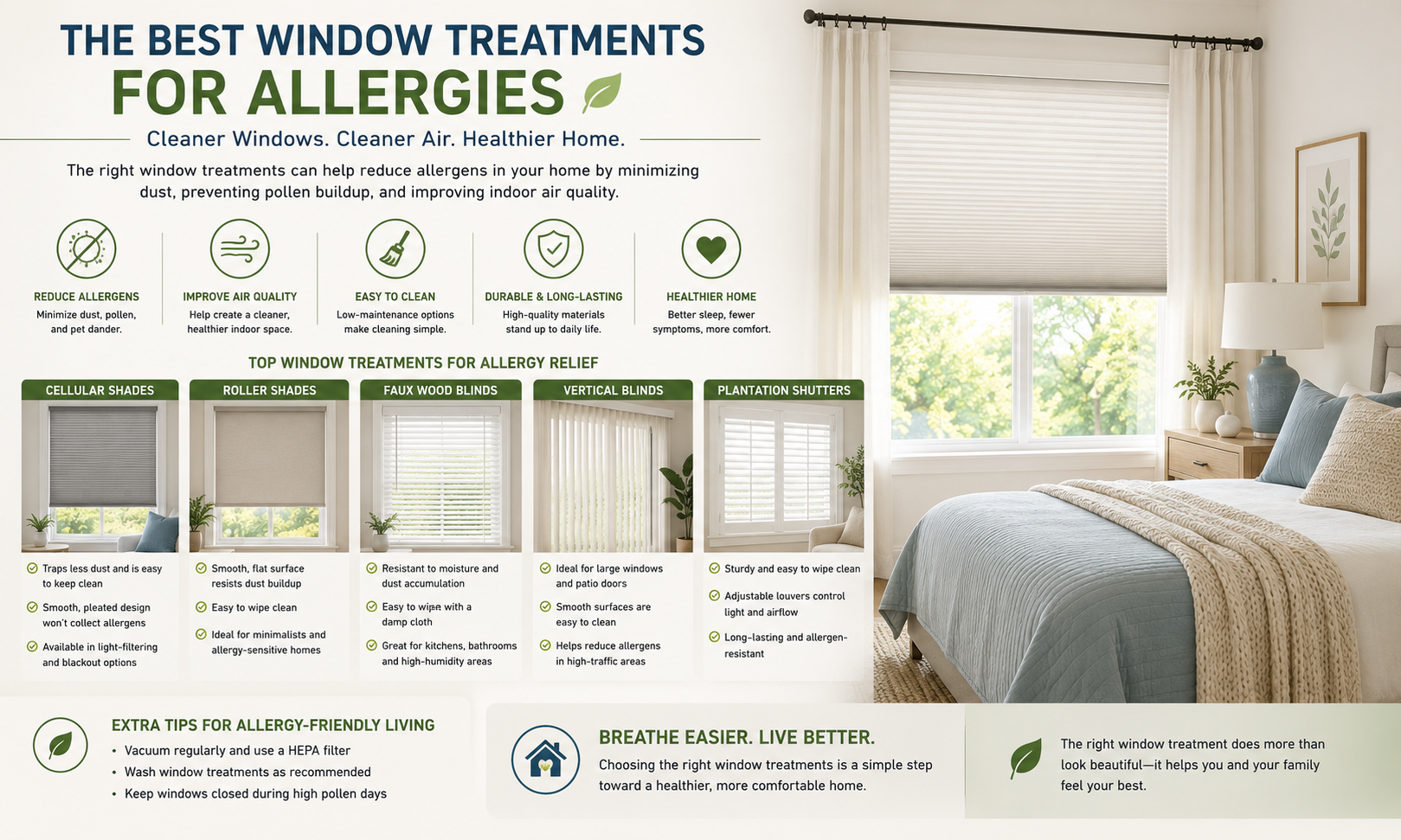
Choosing the best window treatments for allergies can help reduce dust buildup, improve indoor comfort, and support healthier indoor air quality. Some window coverings collect more dust, allergens, and pet dander than others, making material and design important considerations for allergy-sensitive households.
Many homeowners looking for allergy-friendly window treatments prefer options that are easy to clean, low maintenance, and available with low VOC or GREENGUARD certified materials.
Browse our collections of custom window blinds and premium window shades, or learn more about Certified GREENGUARD Window Treatments.
What Makes a Window Treatment Better for Allergies?
Allergy-friendly window treatments are typically:
- Easy to clean
- Less likely to trap dust and allergens
- Made with low-emission materials
- Resistant to moisture and mold buildup
- Simple in design with fewer fabric folds
Best Window Treatments for Allergies
1. Roller Shades (Best Overall)
Roller shades are one of the best options for allergy-sensitive homes because of their smooth surface and simple design, which makes them easier to clean and less likely to trap dust.
- Minimal dust collection
- Easy to wipe clean
- Available in low VOC fabrics
Explore: Custom Roller Shades
2. Faux Wood Blinds
Faux wood blinds are durable, moisture resistant, and easy to maintain, making them a strong option for allergy-friendly homes.
- Easy to dust and clean
- Moisture resistant
- Good for kitchens and bathrooms
Explore: Quality Faux Wood Blinds
3. Solar Shades
Solar shades have a sleek, low-profile design that minimizes fabric folds where dust can accumulate.
- Low maintenance
- Helps reduce glare and UV exposure
- Popular for living rooms and offices
Explore: Premium Solar Shades
4. Cellular Shades
Cellular shades can provide excellent insulation and comfort, though they may require more regular cleaning due to their honeycomb structure.
- Energy efficient
- Soft appearance
- Popular in bedrooms
Explore: Custom Made Cellular Shades
5. Shutters
Shutters are one of the easiest window treatments to clean because of their solid surfaces and minimal fabric materials.
- Easy maintenance
- Durable construction
- Minimal dust retention
Explore: Interior Plantation Shutters
Window Treatments to Avoid for Allergies
Heavy fabric window treatments and layered drapery may trap more dust, pet dander, and allergens compared to simpler blinds and shades.
| Window Treatment | Allergy Friendliness |
|---|---|
| Roller shades | Excellent |
| Faux wood blinds | Excellent |
| Solar shades | Very Good |
| Cellular shades | Moderate |
| Heavy drapery | Lower |
Low VOC and GREENGUARD Certified Window Treatments
Many homeowners concerned about allergies also look for low VOC and GREENGUARD certified window treatments that support healthier indoor air quality.
Learn more: Low VOC emmision Window Shades
Explore: Non Toxic Window Coverings
Best Window Treatments for Allergy-Prone Rooms
| Room | Recommended Option |
|---|---|
| Bedroom | Roller or cellular shades |
| Living room | Solar shades or shutters |
| Kitchen | Faux wood blinds |
| Bathroom | Faux wood blinds or shutters |
| Home office | Roller or solar shades |
Tips for Reducing Allergens Around Window Treatments
- Dust blinds and shades regularly
- Vacuum fabric shades when appropriate
- Use moisture-resistant products in humid rooms
- Choose smooth, low-profile designs when possible
Explore More Healthy Home Window Treatments
- GREENGUARD Certified Window Coverings
- Window Shades with Low VOCs
- Non Toxic Window Treatments
- Shop Window Shades
- Compare GREENGUARD vs GREENGUARD Gold
- Best GREENGUARD Certified Window Shades
- Best GREENGUARD Certified Window Blinds
Final Thoughts
The best window treatments for allergies are easy to clean, low maintenance, and designed to minimize dust buildup. Roller shades, faux wood blinds, solar shades, and shutters are among the most allergy-friendly options for modern homes.
Choosing low VOC and GREENGUARD certified products may also help support healthier indoor air quality and overall home comfort.
Window Treatments for Allergies FAQs
What are the best window treatments for allergies?
Roller shades, faux wood blinds, solar shades, and shutters are among the best window treatments for allergy-sensitive homes.
Do blinds or curtains collect more dust?
Heavy fabric curtains and drapery typically collect more dust and allergens than simple blinds or shades.
Are roller shades good for allergies?
Yes, roller shades are often considered one of the best allergy-friendly window treatments because they are easy to clean and collect less dust.
Do GREENGUARD certified window treatments help with indoor air quality?
GREENGUARD certified window treatments are tested for low chemical emissions and may help support healthier indoor air quality.