









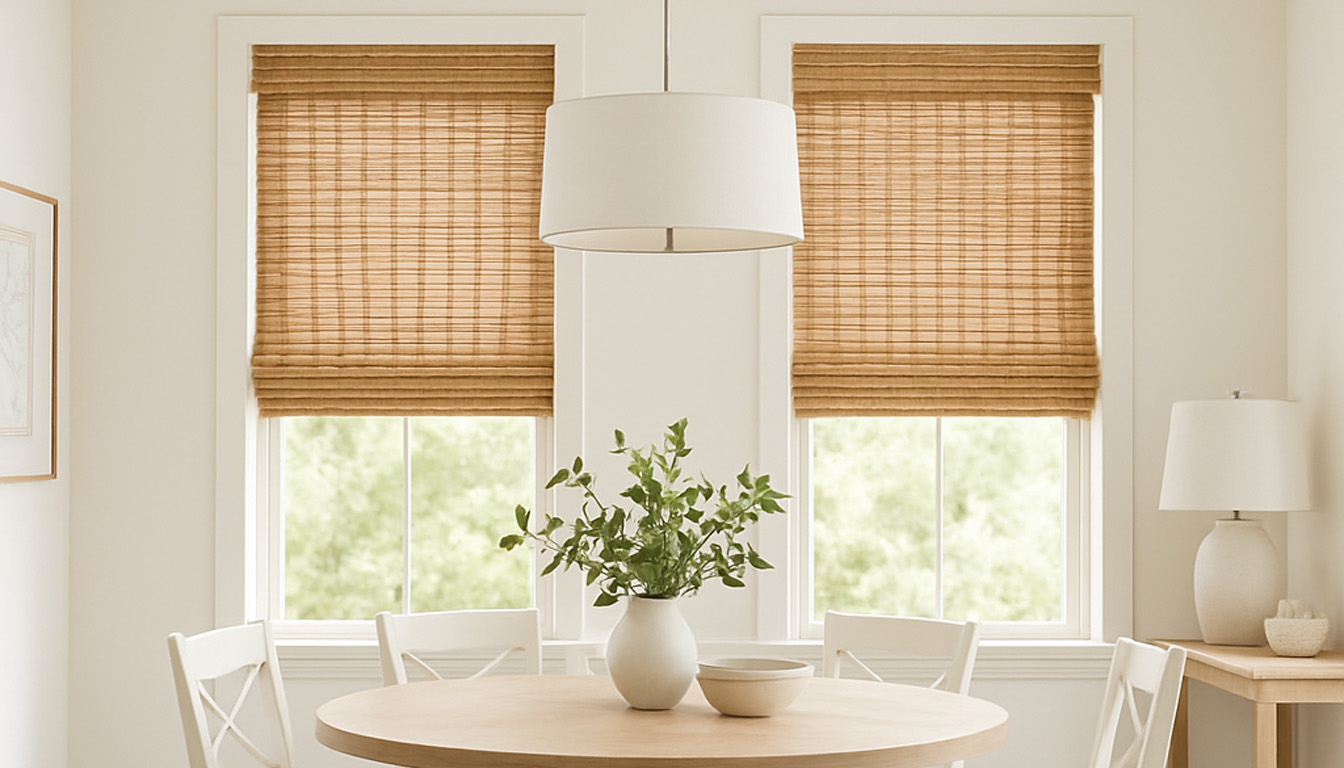
Choosing the right window blinds can transform your home’s comfort, energy efficiency, and style. With so many types of blinds available—from classic venetian blinds to modern motorized systems, the decision can feel overwhelming. This comprehensive guide breaks down 16 essential window blind types, helping you understand which window treatments work best for your specific needs, room by room.
Whether you’re dealing with bright sunlight in a home office, seeking blackout solutions for better sleep, or want to enhance your home’s energy efficiency, the right window coverings make all the difference. From budget-friendly mini blinds to premium wood options, each type offers distinct advantages for light control, privacy, and style. Shop our full selection of custom window shades today.
Quick Guide: How to Pick the Right Blind Type Fast
Before diving into detailed specifications, here’s a rapid decision guide to match your immediate needs with the right blind type. This checklist helps you narrow down options quickly based on common scenarios.
For Maximum Light Control:
Need blackout for bedroom? → Blackout roller shades or cellular shades with blackout lining
Precise light adjustment throughout day? → Venetian blinds (wood, faux wood, or aluminum)
Reduce glare on computer screens? → Solar shades with 1-3% openness
For Large Windows and Doors:
Huge patio door or sliding glass doors? → Vertical blinds or panel-track systems
Wide windows in modern homes? → Panel-track blinds or wide-slat wood blinds
Floor-to-ceiling windows? → Vertical blinds or motorized roller shades
For Specific Room Challenges:
Street-facing ground-floor bedroom? → Top-down/bottom-up cellular shades
South-facing living room i
Bathroom with high humidity? → Faux wood blinds or aluminum blinds
French doors that open frequently? → Perfect-fit blinds or magnetic panels
For Budget and Convenience:
Whole-house on tight budget? → Mini blinds or basic roller shades
Want smart home integration? → Motorized versions of roller, cellular, or wood blinds
Rental property upgrade? → Cordless faux wood or aluminum horizontal blinds
The detailed breakdown of all 16 types follows below to help you understand exactly how each option works and where it excels, including blackout shades.
What to Consider Before Choosing Blinds
Style preferences aside, several performance factors should guide your window treatment decisions. Understanding these considerations helps you select blinds that actually solve your daily challenges rather than just looking good.
Light Control Needs:
Sheer options for maximum natural light while maintaining some privacy
Light-filtering for soft, diffused daylight (ideal for living rooms and home offices)
Blackout for complete darkness (essential for bedrooms, nurseries, and media rooms)
Privacy Requirements:
Street-facing windows need different solutions than backyard-facing ones
Bathrooms require moisture-resistant materials that maintain privacy
Close neighbors or apartments often benefit from top-down/bottom-up functionality
Energy Efficiency and Insulation:
Cellular shades excel in extreme climates, reducing heating and cooling costs
Lined roman shades and quality wood blinds provide moderate insulation
Solar shades specifically target heat gain reduction in sunny rooms
Safety and Convenience Factors:
Cordless operation eliminates strangulation hazards for children and pets
Motorized blinds solve accessibility issues and enable smart home automation
Easy-clean materials matter in kitchens, bathrooms, and homes with allergies
Window Size and Shape Considerations:
Tall, narrow windows suit horizontal blinds for better proportions
Wide expanses work better with vertical systems or large panels
Bay windows and odd shapes often require custom solutions or flexible materials
These factors work together to determine which of the 16 blind types will actually improve your daily life, not just complement your décor.
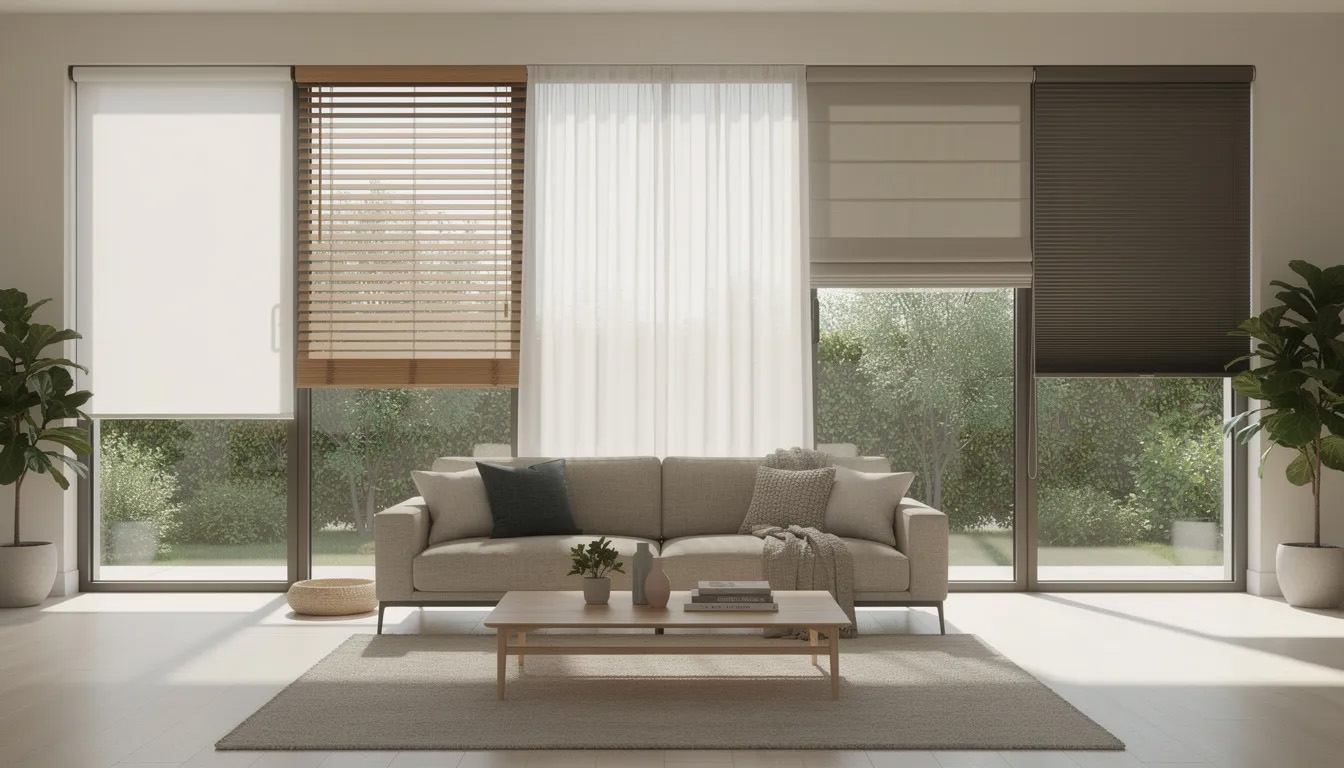
1. Wood Blinds
Wood blinds represent the gold standard of horizontal slatted window treatments, crafted from real hardwood like basswood, cherry, or oak. These classic window coverings bring natural warmth and sophisticated texture that synthetic materials simply can’t match.
Aesthetic Benefits: Wood blinds excel in creating that coveted “furniture-grade” window treatment look. The natural grain patterns and rich stains coordinate beautifully with trim, cabinetry, and hardwood floors. They’re particularly stunning in mid-century modern, farmhouse, and traditional boho interiors where natural materials take center stage.
Best Applications: Real wood blinds work exceptionally well in living rooms, primary bedrooms, and home offices where style and quality matter most. They’re perfect for windows that serve as focal points and spaces where you want window treatments to feel like permanent architectural features rather than temporary coverings.
Advantages:
Superior privacy control with precise slat tilting for light management
Natural insulation properties that help regulate room temperature
Can be custom-stained or painted to match existing woodwork perfectly
Lighter weight than most faux wood alternatives, making large windows easier to operate
Timeless appeal that won’t look dated in five years
Limitations: Wood blinds aren’t suitable for high-humidity environments like steamy bathrooms or areas directly above kitchen sinks. Moisture can cause warping, cracking, and discoloration over time. They also represent a higher upfront investment compared to synthetic alternatives.
Buying Considerations: Basswood offers excellent dimensional stability and takes stain beautifully. For a shutter-like appearance with better view-through, choose 2.5-inch slats over standard 2-inch options. Color matching to existing trim work often drives premium purchases, so consider ordering samples to verify coordination in your actual lighting.
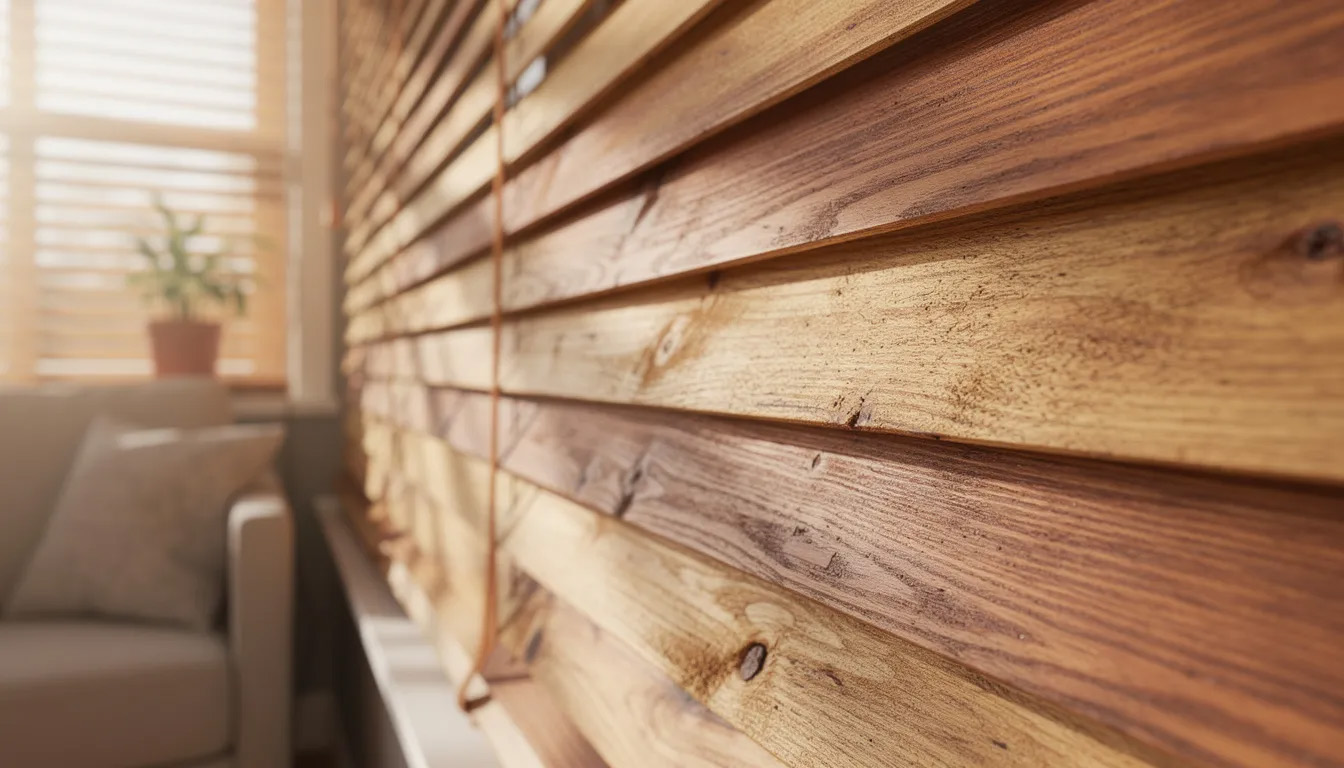
2. Faux Wood Blinds
Faux wood blinds deliver the classic look of real wood blinds while using advanced PVC, vinyl, or composite materials engineered for superior durability. These alternative wood options solve the moisture and maintenance challenges that limit real wood applications.
Durability in Challenging Environments: Unlike natural wood, synthetic faux wood blinds thrive in humid conditions. They’re specifically engineered for kitchens, bathrooms, laundry rooms, and coastal homes where moisture and temperature fluctuations would damage real wood. The composite materials resist warping, yellowing, and dimensional changes that plague natural materials.
Performance Advantages:
Complete moisture resistance makes them ideal for any room in the house
Easy maintenance with simple wipe-clean surfaces that resist stains
Excellent dimensional stability in heat and humidity
Wide range of realistic wood grains and paint colors
Often lower cost than premium real wood options
Potential Drawbacks: Quality varies significantly between manufacturers. Budget versions can look obviously synthetic with plastic sheen and unrealistic grain patterns. Faux wood is typically heavier than natural wood, which can make very large windows more difficult to operate manually.
Material Selection: Look for products with UV-stable finishes that include warranties against fading and discoloration. Higher-end faux wood blinds incorporate wood flour and advanced texturing that creates remarkably realistic wood grain appearance. For very large windows, consider dividing the span into multiple smaller blinds to reduce lifting weight.
3. Venetian Blinds (Traditional Horizontal Blinds)
Venetian blinds are the archetypal horizontal slatted window treatment—the style most people picture when they hear “blinds.” These versatile window coverings use aluminum, wood, or PVC slats connected by ladder cords, offering precise light control through slat rotation.
Universal Applications: Traditional horizontal blinds work well in almost any space, making them especially popular in rental properties and budget-conscious whole-house installations. They’re the go-to choice for apartment living, home offices, and spare bedrooms where functionality trumps luxury aesthetics.
Light and Privacy Control: The tilting slat mechanism provides exceptional control over both light levels and privacy. You can fine-tune the angle to block direct sunlight while maintaining outward views, or close completely for maximum privacy. This flexibility makes them excellent for rooms with varying daily light needs.
Advantages:
Wide range of colors and finishes to match any décor
Compatible with both inside and outside window mounting
Relatively inexpensive, especially in aluminum and basic wood options
Easy to layer with curtains or valances for a more finished designer look
Proven durability and straightforward replacement parts
Maintenance Considerations: Horizontal slats collect dust on both top and bottom surfaces, requiring regular cleaning with dusting tools or damp cloths. Corded versions pose potential safety concerns for young children unless equipped with cordless mechanisms or proper safety devices.
Design Integration: While basic venetian blinds can look utilitarian, they form an excellent foundation for layered window treatments. Adding decorative side panels or a coordinated valance transforms the look from rental-grade to custom-designed.
4. Mini and Micro Blinds
Mini blinds feature narrow 1-inch horizontal slats, while micro blinds use even slimmer ½-inch slats. These compact versions of traditional venetian blinds offer space-saving solutions for smaller windows and budget-conscious installations.
Ideal Applications: Mini blinds excel on narrow windows, bathroom windows, and spaces with shallow window frames where standard 2-inch slats would overwhelm the opening. They’re also popular for office buildings, classrooms, and utility areas where function matters more than luxury appeal.
Material Options: Most mini and micro blinds use lightweight aluminum construction, though vinyl options exist. The narrow profile means even large windows remain manageable with standard cord mechanisms. Modern versions increasingly offer cordless operation for cleaner appearance and enhanced safety.
Budget Benefits:
Extremely affordable for whole-house installations
Low-profile design fits shallow window frames
Good solution for rental property upgrades, while real wood blinds offer a premium alternative for homeowners seeking elegance and durability
Lightweight construction simplifies installation
Aesthetic Limitations: The numerous narrow slats create busy horizontal lines that can look overwhelming on large windows. The utilitarian appearance, while functional, lacks the substantial presence of wider-slat alternatives. Aluminum slats can also bend permanently if mishandled during cleaning.
Best Practices: Consider custom mini blinds primarily for functional spaces like garages, basements, and utility rooms, or for windows where the blind will be hidden behind curtains. For main living areas, wider slats typically provide better proportions and visual appeal.
5. Vertical Blinds
Vertical blinds feature tall, hanging slats (called vanes) that rotate and slide side-to-side along a headrail track. This orientation makes them uniquely suited for wide windows and door openings where traditional horizontal blinds would be impractical.
Optimal Use Cases: Vertical blinds are practically essential for sliding glass doors and patio doors where the blind must clear the door’s opening path. They’re also excellent for large picture windows, especially those wider than they are tall. Modern fabric vanes look far more sophisticated than the heavy vinyl versions popular in the 1980s.
Material Varieties: Explore a wide selection of motorized blinds and shades available in different materials and styles.
PVC vanes offer maximum durability and easy cleaning
Fabric vanes provide better light diffusion and acoustic softening
Aluminum options work well in commercial or industrial-style interiors
Operational Advantages:
Individual vanes can be easily replaced if damaged
Excellent control over light direction, especially morning and evening sun
Stack compactly to one or both sides, maximizing view and door operation
Work well for tall windows where horizontal stack height would be problematic
Common Concerns: Vertical blinds can be noisy in drafts or when doors open and close frequently. Low-quality systems may look dated, though modern slim-profile tracks and quality fabrics have greatly improved the aesthetic. Pet owners should note that cats and dogs may damage individual vanes.
Installation Considerations: For sliding doors, plan the stack direction to avoid blocking the sliding panel’s operation. Quality track systems are essential for smooth operation, especially on wide spans exceeding eight feet.

6. Panel-Track / Panel Blinds
Panel-track blinds represent a sleek, contemporary alternative to traditional vertical blinds. These systems use large fabric panels that slide along a multi-panel track, creating clean, architectural lines that suit modern interiors.
Modern Design Applications: Panel-track systems excel in contemporary homes with large windows, sliding doors, and open-plan layouts. They’re also popular as room dividers, creating flexible privacy screening between living and dining areas or separating home office spaces.
Minimal Stack-Back: Unlike traditional verticals with many narrow slats, panel systems use fewer, wider panels. This creates less visual bulk when open and requires less wall space for stacking. A typical sliding door might use just 3-4 wide panels instead of a dozen narrow vertical slats.
Performance Benefits:
Learn more about the Highest Rated Faux Wood Blinds for exceptional performance and customer satisfaction.
Very clean, uncluttered appearance
Can incorporate any fabric type: solar screen, blackout, decorative
Excellent for floor-to-ceiling windows in modern homes
Coordinate beautifully with roller shades in matching fabrics
Considerations: Panel systems work best on larger windows where the wide panels have visual presence. They’re not ideal for small windows where one panel would cover the entire opening. Light control is more on/off compared to the graduated control possible with rotating slats.
Fabric Selection: The wide panel format showcases fabric beautifully, making it worth investing in higher-quality materials. Solar screen fabrics work excellently for daytime glare control, while blackout options serve bedrooms and media rooms.
7. Roman Shades
Roman shades combine the soft elegance of fabric drapery with the space efficiency of window shades. When raised, the fabric forms neat horizontal folds; when lowered, they create a smooth, tailored panel that adds sophisticated texture to any room.
Style Variations:
Flat romans create smooth panels when lowered with crisp folds when raised
Hobbled romans maintain soft folds even when fully extended for a relaxed look
Relaxed romans feature a gentle curve at the bottom for casual elegance
Best Room Applications: Roman shades excel in living rooms, primary bedrooms, and dining rooms where the fabric can serve as a design focal point. They’re particularly effective in spaces where you want the softness of curtains but lack the wall space for full drapery panels.
Customization Options: The fabric choices are virtually unlimited, from natural linens and cottons to designer prints and luxury silks. Lining options dramatically affect performance: unlined for light filtering, blackout lining for bedroom darkness, or thermal lining for energy efficiency.
Advantages:
Highly customizable with pattern and texture possibilities
Better acoustic softening than hard blinds
Can be coordinated with other room textiles
Available in cordless and motorized operations for safety
Maintenance Requirements: Fabric shades require more care than hard blinds. Regular vacuuming with upholstery tools prevents dust accumulation, and some fabrics may need professional cleaning. Consider washable fabrics for children’s rooms and high-traffic areas.
Installation Tips: For tall or wide romans, the fabric weight can strain basic cord systems. Motor operation is increasingly recommended for shades over 48 inches wide to ensure smooth operation and longevity.
8. Roller Shades
Roller shades offer the ultimate in minimalist window design—a single sheet of fabric that rolls up onto a concealed tube. This simplicity makes them incredibly versatile, working in everything from modern lofts to traditional homes.
Fabric Performance Options:
Sheer fabrics maintain views while diffusing harsh light
Light-filtering options provide privacy while allowing soft illumination
Blackout fabrics create near-complete darkness for bedrooms and media rooms
Printed and textured fabrics add personality without visual bulk
Space Efficiency: Roller shades require minimal depth, making them perfect for windows with shallow frames or spaces where protruding treatments would interfere with furniture placement. They also work excellently behind decorative curtains where you want function without visual competition.
Advantages:
Clean, uncluttered appearance suits any décor style
Wide variety of fabrics and opacity levels
Budget-friendly options available in basic materials
Excellent candidates for motorization on tall or hard-to-reach windows
Operational Considerations: Unlike slatted blinds that offer graduated light control through tilting, roller shades are essentially up-or-down operation. However, dual-roller systems can combine different opacity levels in the same window for flexible day/night control.
Mounting and Sizing: Inside mounting creates the cleanest look but requires adequate depth. Outside mounting can help achieve better light blocking by overlapping the window frame. For very wide windows, consider multiple narrower shades to prevent sagging.
9. Solar Shades
Solar shades are specialized roller shades engineered with UV-filtering screen fabrics that reduce glare and heat while preserving outward views. The fabric “openness factor” determines how much light and view they allow through.
Technical Performance: Solar screen fabrics are rated by openness percentage—typically 1%, 3%, 5%, or 10%. Lower percentages provide more glare control and privacy but darker interiors. Higher percentages maintain brighter rooms and clearer views but less solar protection.
Ideal Applications:
South and west-facing windows with intense sun exposure
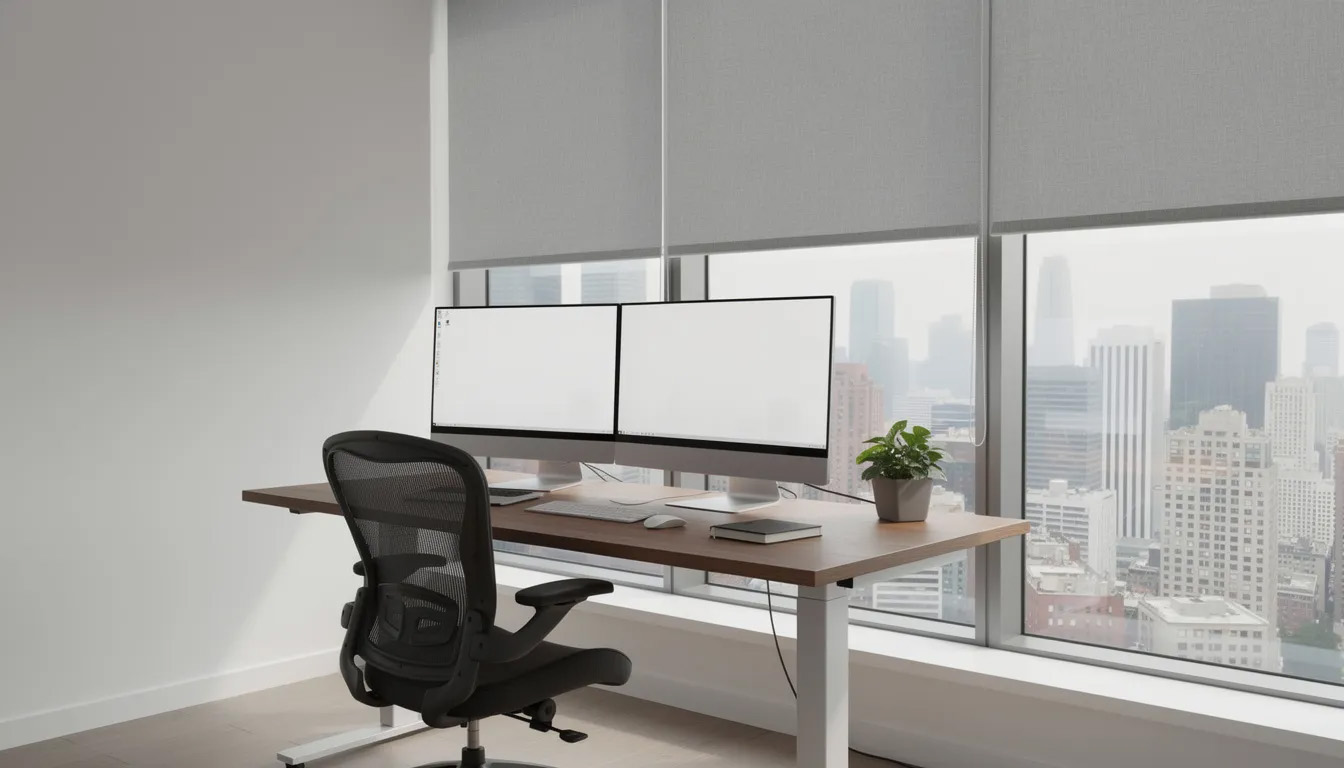
Home offices and media rooms where screen glare is problematic
High-rise apartments and offices with strong daytime glare
Sunrooms and spaces where you want to enjoy views while staying comfortable
Energy Benefits: Quality solar shades can significantly reduce cooling costs by blocking solar heat gain while still allowing natural light. They also protect furniture, flooring, and artwork from UV damage that causes fading.
Privacy Limitations: Solar shades provide excellent daytime privacy—you can see out clearly while people outside see only dark screening. However, at night when interior lights are on, the privacy reverses. Many homeowners pair solar shades with drapery or blackout shades for complete 24-hour coverage.
Selection Guidelines: For maximum glare control in home offices, choose 1-3% openness. For living areas where you want to maintain brighter conditions, 5-10% openness works well. Darker fabric colors typically provide better outward visibility and glare control.
10. Cellular (Honeycomb) Shades
Cellular shades feature pleated fabric construction that forms air-filled cells resembling a honeycomb. These trapped air pockets create exceptional insulation properties, making cellular shades among the most energy-efficient window coverings available. For windows with minimal mounting space, explore shallow mount blinds as an alternative solution.
Energy Performance: The U.S. Department of Energy recognizes cellular shades as highly effective for reducing heat loss through windows. Double-cell designs provide superior insulation compared to single-cell options, with some configurations reducing energy loss by 40% or more on single-pane windows.
Construction Options:
Single-cell for basic insulation and lower cost
Double-cell for maximum energy efficiency
Triple-cell for extreme climate performance
Light-filtering to blackout opacity options
Cordless and motorized operations standard
Best Applications: Cellular shades excel in bedrooms, nurseries, and any room where temperature control is a priority. They’re particularly valuable in homes with older single-pane windows or rooms with challenging solar exposure. The sound-absorbing qualities also benefit media rooms and open-plan spaces.
Functional Features: Many cellular shades offer top-down/bottom-up operation, allowing light from the top of the window while maintaining privacy below. This feature is invaluable in street-facing rooms and bathrooms where you want natural light without compromising privacy.
Maintenance Considerations: The pleated structure can be damaged by crushing or pet claws. Regular gentle vacuuming keeps cells clean, but avoid harsh cleaning that could deform the fabric. Once cells are severely compressed, they’re difficult to restore to original shape.
Size and Installation: Cell size (3/8”, 1/2”, 3/4”) should scale with window size—larger cells suit larger windows visually. Proper measurement is critical since the cellular structure requires specific mounting depth to function correctly.
11. Top-Down / Bottom-Up Shades
Top-down/bottom-up functionality transforms how you control privacy and light, allowing shades to lower from the top or raise from the bottom independently. This feature is available on cellular, Roman, and some pleated shades.
Privacy Innovation: This dual operation solves the common dilemma of wanting natural light while maintaining privacy. You can lower the shade from the top to cover just the lower portion of the window, maintaining street-level privacy while allowing sky light to enter above.
Urban Living Solutions: Top-down/bottom-up shades are particularly valuable in townhouses, ground-floor apartments, and homes with close neighbors. They allow you to enjoy daylight without giving passersby views into your living spaces.
Best Applications:
Street-facing bedrooms where you want morning light but evening privacy
Bathrooms where privacy is essential but natural light is desired
Home offices at street level where screen glare and privacy both matter
Kitchen windows above sinks facing busy sidewalks
Operational Benefits: The flexibility extends beyond privacy—you can position the shade anywhere along the window height for precise light control. This is especially useful for managing seasonal sun angles or varying daily lighting needs.
Cost Considerations: Top-down/bottom-up operation typically adds 20-30% to the cost of standard lift-only versions due to more complex hardware. However, the functionality often justifies the investment in rooms where privacy and light control are daily considerations.
Design Integration: These functional shades work well with decorative side panels or valances that add style while maintaining the practical operation. Consider blackout backing for bedrooms on busy streets where both light control and privacy matter.
12. Woven Wood and Matchstick Shades
Woven wood shades bring organic texture and natural warmth through materials like bamboo, rattan, reed, and jute. These natural window treatments operate like Roman shades but showcase the inherent beauty of woven natural fibers.
Material Distinctions: Standard woven wood shades use thicker weaves that create substantial texture and visual interest. Matchstick shades feature very thin bamboo or reed elements that create lighter, more delicate patterns while still providing natural warmth.
Design Applications: These natural shades excel in coastal homes, boho-inspired interiors, and any space where you want to introduce organic texture. They’re particularly effective in sunrooms, casual dining areas, and bedrooms where the goal is creating a relaxed, nature-connected atmosphere.
Layering Potential: Woven wood shades layer beautifully with white or cream drapery panels. The natural shade provides texture and modest privacy while the drapery adds softness and enhanced light control. This combination is especially popular in master bedrooms and living rooms.
Advantages:
Authentic natural texture that synthetic materials can’t replicate
Available with privacy linings for enhanced light control
Durable and long-lasting when properly maintained
Coordinate beautifully with natural flooring and furniture
Performance Limitations: Unlined woven shades allow significant light transmission and some visibility, especially at night. Natural fibers can vary in color and may fade or darken with UV exposure over time. They’re also less suitable for high-humidity environments like bathrooms.
Specification Considerations: Lining options dramatically affect both appearance and function. Unlined shades maintain the natural translucent beauty but provide minimal privacy. Privacy linings add opacity while blackout linings enable bedroom use.
13. Aluminum / Metal Blinds
Aluminum blinds represent the workhorse of the window treatment world—durable, affordable, and practical for high-traffic or challenging environments. Modern metal blinds offer sophisticated finishes that go far beyond basic white or beige.
Performance Characteristics: Aluminum slats naturally reflect sunlight, helping manage heat gain in sunny rooms. They’re completely moisture-resistant, making them ideal for bathrooms, kitchens, and even outdoor applications like screened porches. The material won’t warp, crack, or fade like some alternatives.
Finish Options: Contemporary aluminum blinds offer extensive color and texture choices, including matte, gloss, brushed metal, and even wood-grain patterns. Metallic finishes can coordinate with modern hardware and fixtures for a cohesive contemporary look.
Best Applications:
High-traffic areas where durability matters most
Bathrooms and kitchens where moisture resistance is essential
Home offices and workspaces where function trumps luxury
Garages, utility rooms, and basement windows—these areas often benefit from vertical window blinds
Rental properties where low maintenance and replacement cost matter
Advantages:
Excellent value for whole-house installations
Easy cleaning with damp cloth or duster
Lightweight construction simplifies installation
Wide range of colors and finishes available
Cordless options increasingly standard
Limitations: Aluminum slats can dent if bent sharply during cleaning or adjustment. The material can also be noisy in drafts or when windows are opened. While functional, the aesthetic is more utilitarian than warm or luxurious.
Modern Applications: In contemporary homes, metallic aluminum blinds can actually enhance the design when chosen to coordinate with stainless steel appliances, brushed nickel fixtures, or industrial-style furniture.
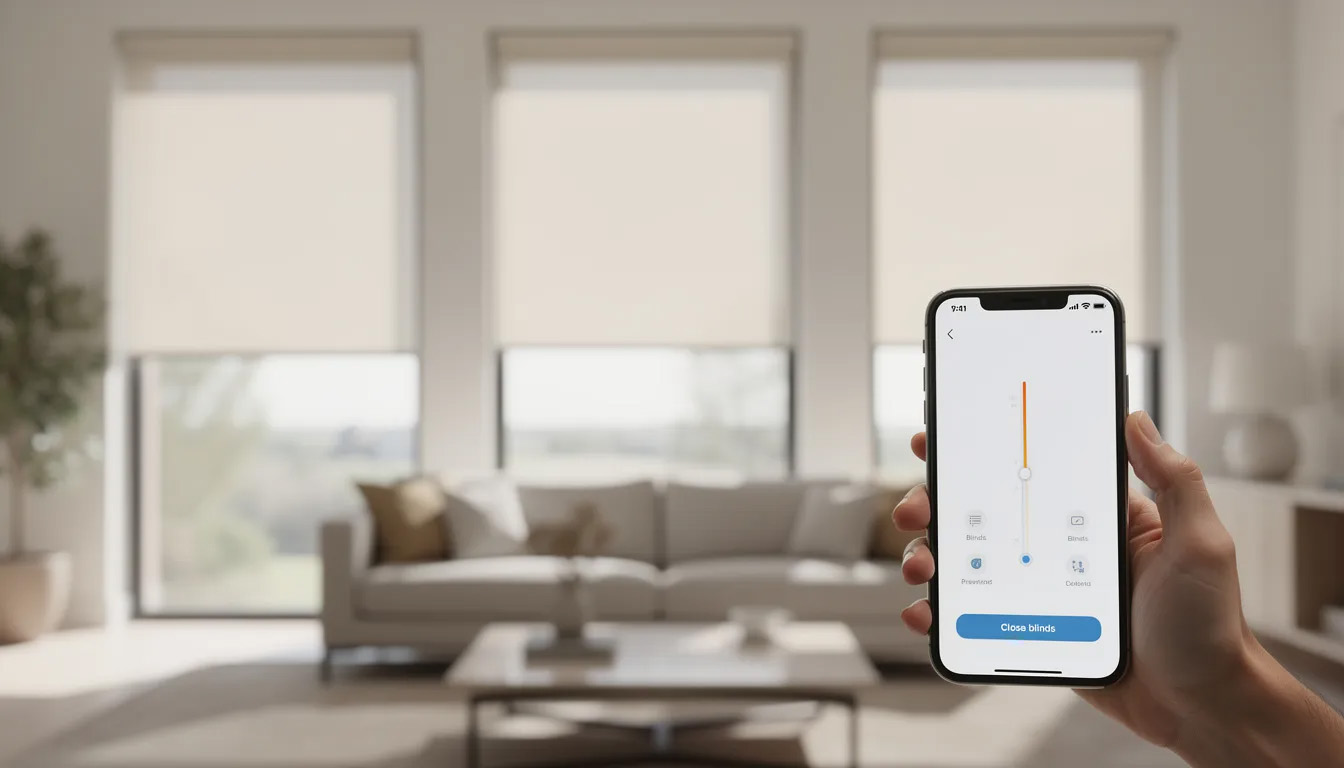
14. Motorized and Smart Blinds
Motorization transforms any manual blind into a convenient, accessible, and potentially smart-home-integrated system. This technology is available across most blind types, including roller, Roman, cellular, and many horizontal slatted options.
Technology Options:
Battery-powered motors for easy retrofit installation
Hardwired motors for permanent installation and frequent use
Solar charging systems for sunny windows
RF, Wi-Fi, or Z-Wave control for smart home integration
Practical Applications: Motorized blinds solve real problems beyond convenience. They’re essential for very tall windows, wide banks of windows, and hard-to-reach skylights. They also benefit elderly users or anyone with mobility limitations that make manual operation difficult.
Smart Home Integration: Modern motorized blinds integrate with platforms like Alexa, Google Home, and Apple HomeKit. This enables voice control, scheduling (opening at sunrise, closing at sunset), and coordination with other smart home systems for energy management.
Energy Management: Automated blinds can respond to temperature sensors, closing during peak cooling hours to reduce air conditioning load or opening on sunny winter days to capture solar heat gain. This automated approach often achieves better energy performance than manual operation.
Cost Considerations: Motorization typically doubles or triples the cost of manual blinds, but the convenience and energy benefits often justify the investment, especially on hard-to-reach windows or whole-house installations.
Installation Planning: Decide early whether wiring is feasible—hardwired motors are more reliable for frequent operation. For retrofits or rental properties, battery-powered motors offer easier installation without electrical work.
Real-World Example: Imagine programming your bedroom blackout shades to automatically close at sunset and gradually open 30 minutes before your alarm, creating natural wake-up lighting while maintaining privacy throughout the night.
15. Blackout Blinds and Shades
Blackout capability is a performance feature available across many blind types rather than a specific style. True blackout blocks virtually all light transmission, creating cave-like darkness essential for quality sleep and media viewing.
Material Technologies: Blackout performance comes from dense, light-blocking materials or specialized lining systems. Roller shades use blackout fabrics, Roman shades employ blackout lining, and cellular shades incorporate room-darkening fabric in their construction.
Installation for Maximum Performance: Even the best blackout blind allows light infiltration if improperly installed. Side channels, overlap systems, and outside mounting help eliminate the “light halo” that appears around edges. Some systems include magnetic side seals for complete light blocking.
Best Applications:
Primary bedrooms for deeper, more restful sleep
Nurseries and children’s rooms for consistent nap schedules
Home theaters and media rooms for optimal viewing
Shift workers’ bedrooms who sleep during daylight hours
East and west-facing rooms with intense morning or evening sun
Beyond Light Blocking: Quality blackout treatments also improve room temperature stability and provide sound dampening. The dense materials create thermal barriers that complement the home’s insulation system.
Design Balance: Blackout functionality can make rooms feel cave-like if used everywhere. Consider pairing blackout shades with decorative curtains that can be opened during the day, or use blackout selectively in bedrooms while choosing light-filtering options in living areas.
Layered Systems: Dual roller systems combine blackout and solar screen fabrics in one window, providing complete flexibility from total darkness to glare-controlled daylight. This approach works excellently in master bedrooms and multipurpose rooms.
16. Valances and Cornices (Finishing Touches)
Valances and cornices serve as the finishing touches that transform functional window treatments into polished, intentional design elements. These top treatments hide hardware while adding style and visual weight to windows.
Structural Differences: Fabric valances are soft treatments that drape or pleat across the window top, while cornices are rigid boxes covered in fabric or made from painted wood. Both hide the mechanical elements of blinds and shades while introducing decorative opportunity.
Design Functions:
Hide unsightly headrails and mounting hardware
Add visual height and presence to windows
Introduce color and pattern without full drapery commitment
Create cohesive look when windows vary in size or style
Style Applications: Keep lines simple for modern homes—a basic box-pleat valance or streamlined cornice maintains clean aesthetics. Traditional homes can accommodate more elaborate styles, but avoid overly fussy treatments that date quickly.
Coordination Strategies: Match or coordinate valances with other room textiles like throw pillows, bedding, or upholstery for a designer-collected look. This approach unifies the room without requiring expensive custom drapery throughout.
Practical Considerations: Valances and cornices are purely decorative—they don’t provide privacy, light control, or energy benefits. However, they can make inexpensive blinds look custom and expensive, significantly improving the room’s overall appearance.
Sizing Guidelines: Valances should be proportioned to the window and ceiling height. In rooms with 8-foot ceilings, keep valances to 12-16 inches deep. Higher ceilings can accommodate deeper treatments without overwhelming the space.
How to Match Blind Types to Your Windows
Different window configurations require different solutions for optimal function and appearance. This room-by-room guide helps you choose the right blind type based on specific window challenges.
Sliding Glass Doors and Patio Doors:
Primary choice: Vertical blinds for easy door operation
Modern alternative: Panel-track systems for contemporary style
Budget option: Sliding panels or vertical cellular shades
Large Picture Windows:
Wide horizontal expanse: Wood or faux wood blinds with 2.5” slats
Floor-to-ceiling: Panel track or motorized roller shades
Energy focus: Double-cell cellular shades for insulation
Bay Windows:
Individual treatment: Wood or faux wood blinds on each section
Unified look: Roman shades with coordinated fabrics
Budget solution: Mini blinds with matching valances
French Doors:
Magnetic or perfect-fit: Blinds that move with door operation
Traditional: Wood blinds mounted on door frames
Elegant: Roman shades with tie-backs for door clearance
Narrow Sidelights:
Proportional choice: 1” mini blinds or narrow cellular shades
Decorative: Stained glass film with simple roller shade behind
Security: Light-filtering cellular for privacy without total opacity
Corner Windows:
Continuous look: Same blind type with custom corner brackets
Individual treatment: Coordinate colors while varying widths as needed
Modern solution: Motorized rollers for synchronized operation
Skylights and Roof Windows:
Essential: Motorized cellular with side channels to prevent sagging
Energy critical: Double-cell blackout for temperature control
Manual option: Cord-tensioned pleated shades with guides
Inside vs Outside Mounting: Inside mounting creates clean, architectural lines but requires adequate depth and limits blackout potential. Outside mounting accommodates shallow frames and maximizes light blocking but creates more visual bulk.
Practical Buying Tips: Measuring, Materials, and Budget
Successful blind installation starts with accurate measurements and appropriate material selection for each room’s specific conditions. These practical steps prevent costly mistakes and ensure optimal performance.
Measuring Fundamentals: Use a steel measuring tape for accuracy—cloth tapes can stretch and create sizing errors. Measure width and height in three places (left, center, right for width; top, center, bottom for height) and use the smallest measurements to ensure proper fit.
Note any obstacles like window cranks, locks, or trim details that could interfere with blind operation. For inside mounting, measure the depth to ensure adequate clearance for the blind mechanism and operation.
Material Selection by Room:
Bathrooms and kitchens: Faux wood, aluminum, or moisture-resistant vinyl
Bedrooms: Blackout cellular, lined Roman, or dual roller systems
Living areas: Wood blinds, solar shades, or designer Romans
Rental properties: Cordless faux wood or aluminum for durability and safety
Children’s rooms: Cordless cellular or Roman shades with easy-clean fabrics
Budget Planning Strategy: Prioritize motorization and premium materials for a few key windows first—typically the master bedroom and main living areas. Use standard manual operation and budget-friendly materials in secondary spaces like guest rooms and utility areas.
Consider the long-term value: spending more on quality wood blinds in living areas provides years of satisfaction, while saving money on basic aluminum in utility spaces makes financial sense.
Sample Ordering: Always order fabric or material samples to evaluate colors and textures in your actual lighting conditions. Colors can appear dramatically different in showroom fluorescent lighting versus your home’s natural and artificial light.
Professional vs DIY Installation: DIY installation works well for standard windows with basic roller or horizontal blinds. Consider professional installation for bay windows, motorized systems, or multiple wide panel-track installations where precision and warranty coverage justify the cost.
Recap: Which Type of Blind is Best for You?
The best blind type depends on balancing your priorities across function, style, and budget. Here’s how to approach the final decision:
For Maximum Light Control: Venetian blinds (wood, faux wood, aluminum) provide the most precise day-to-day light adjustment through slat tilting, while blackout cellular or roller shades offer complete darkness when needed.
For Energy Efficiency: Cellular shades lead the category with superior insulation properties, followed by lined Roman shades and quality wood blinds that provide moderate energy benefits.
For Large Windows and Doors: Vertical blinds remain the practical choice for sliding doors, while panel-track systems offer a modern alternative. Wide wood blinds work well for large horizontal expanses.
For Style and Sophistication: Wood blinds and custom Roman shades provide the most design flexibility and premium appearance, while woven wood adds natural texture and warmth.
For Budget-Conscious Projects: Aluminum mini blinds and basic roller shades offer functional solutions at minimal cost, while faux wood blinds provide better appearance for moderate budgets.
Mix Types Throughout Your Home: You don’t need one blind style everywhere. Use blackout cellular in bedrooms, solar shades in bright living areas, moisture-resistant faux wood in bathrooms, and decorative Romans in formal spaces.
Prioritize Your Top Two Needs: Whether that’s blackout capability plus style, energy efficiency plus budget, or easy maintenance plus child safety, focusing on your most important requirements helps narrow the 16 options to the best choices for your specific situation.
Start by listing each room, its primary light control and privacy needs, and any special requirements like moisture resistance or energy efficiency. Then match those requirements to the blind types that excel in those areas. Take measurements, order samples, and make decisions room by room rather than trying to choose one solution for your entire home.
The right window treatments dramatically improve your daily comfort, energy bills, and home’s appearance—making the research and selection process a worthwhile investment in your living environment.
Related Articles:
What are Window Blinds?
What are Window Shades?
Should I Use Two Separate Blinds or a 2 on 1 Headrail?