








When comparing cellular shades, some homeowners assume all multi-layered options are the same. But double cell shades and cell-in-cell shades are not identical. Both are designed to improve insulation and comfort, but the internal construction is different, which can affect appearance, energy efficiency, and overall performance.
If you are deciding between double cell vs cell-in-cell shades, the right choice depends on what matters most to you. Some shoppers want stronger insulation and a more advanced shade design, while others want a more traditional double cell structure with a proven energy-efficient performance.
Browse our collection of cellular shades to compare styles, light control options, and energy-efficient designs. Shop elegant and practical custom-fit shades tailored to your exact specifications.
What Are Double Cell Shades?
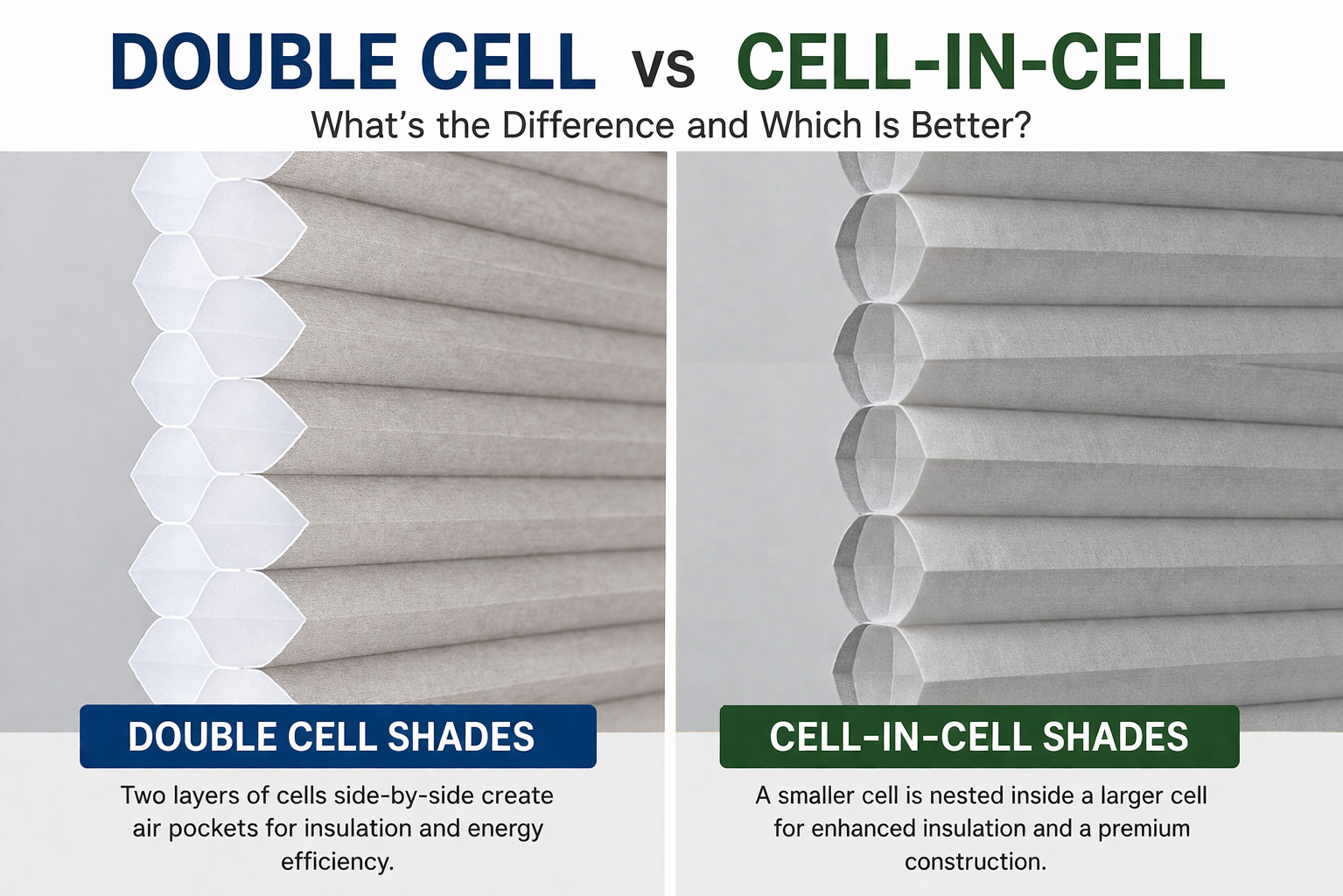
Double cell shades are cellular shades with two layers of honeycomb cells. This layered construction helps trap more air at the window than a single cell design, which can improve insulation and indoor comfort.
Because of their two-layer design, double cell shades are often chosen for rooms where energy efficiency and temperature control are a higher priority. Shop our selection of double cell honeycomb shades
What Are Cell-in-Cell Shades?
Cell-in-cell shades feature a smaller cell nested inside a larger outer cell. Instead of two separate rows of cells, the design places one cell within another, creating a more layered internal structure.
Cell-in-cell shades are often chosen by homeowners who want an upgraded cellular shade option that can offer strong insulation and a more refined construction.
What Is the Difference Between Double Cell and Cell-in-Cell Shades?
The main difference between double cell and cell-in-cell shades is how the cells are arranged. Double cell shades use two separate layers of cells, while cell-in-cell shades place one cell inside another.
That difference in construction can influence how the shade looks, how much insulation it provides, and how substantial it feels at the window.
Double Cell vs Cell-in-Cell Shades Comparison
| Feature | Double Cell Shades | Cell-in-Cell Shades |
|---|---|---|
| Construction | Two layers of honeycomb cells | One cell nested inside another cell for multiple layers of insulation |
| Insulation | Strong insulation | Stronger insulation, upgraded design |
| Appearance | Layered cellular look | More advanced nested-cell appearance |
| Energy Efficiency | Designed to improve thermal performance | Designed for enhanced thermal performance and layered construction |
| Profile | Can appear fuller than single cell shades | Can feel slightly more engineered or substantial depending on design |
| Best For | General energy efficiency and comfort | Homeowners looking for a more premium multi-cell option |
Are Cell-in-Cell Shades Better Than Double Cell Shades?
Cell-in-cell shades are not automatically better for every home, but they may be better for homeowners who want a more advanced cellular construction and a premium energy-efficient shade design.
Double cell shades are still an excellent choice and remain a very practical option for improved insulation and everyday comfort. In many rooms, either one can perform very well.
Which Is Better for Insulation?
Both double cell shades and cell-in-cell shades are built for stronger insulation than simpler cellular shade constructions. In many cases, cell-in-cell shades are positioned as a more advanced version of multi-cell insulation because of the nested internal design.
If maximum insulation is one of your top goals, cell-in-cell shades may be worth considering. If you want strong energy efficiency in a more familiar multi-cell format, double cell shades are also a very strong option.
Which Is Better for Appearance?
From the standard view, both look about the same. The biggest difference is in the sides of the shades, where you can see the honeycomb structure. Double cell shades have a more familiar layered honeycomb appearance, while cell-in-cell shades often feel more upgraded because of the nested-cell structure.
Which Is Better for Bedrooms?
For bedrooms, either option can work well depending on whether privacy, blackout performance, and insulation are the main priorities. Both double cell and cell-in-cell shades can be strong choices for improving comfort, especially in rooms that get too warm or too cool.
Which Is Better for Living Rooms?
In living rooms, both options can work well. Double cell shades are often a practical choice for insulation and everyday comfort, while cell-in-cell shades may appeal to homeowners who want a more premium cellular shade construction.
Are Cell-in-Cell Shades Worth the Extra Cost?
Cell-in-cell shades can be worth the extra cost for homeowners who want a more advanced cellular shade design and are especially focused on insulation, comfort, and premium construction.
If you want strong energy efficiency at a more straightforward price point, double cell shades may still be the better value.
How to Choose Between Double Cell and Cell-in-Cell Shades
To choose between double cell and cell-in-cell shades, think about what matters most in your space:
- Choose double cell shades if: You want strong insulation, everyday comfort, and a proven multi-cell design
- Choose cell-in-cell shades if: You want a more advanced nested-cell construction and potentially more premium thermal performance
If budget and simplicity matter more, double cell shades may be the better fit. If you want the more advanced option and are willing to invest a little more, cell-in-cell shades may be worth it.
Which Cellular Shade Option Is Right for You?
Both double cell shades and cell-in-cell shades are designed to improve comfort, privacy, and energy efficiency. The best choice depends on your room, your budget, and whether you prefer a traditional double-layer construction or a more advanced nested-cell design.
If you want strong all-around insulation and value, double cell shades are a great choice. If you want a more engineered premium option, cell-in-cell shades may be the better fit.
Learn More About Cellular Shades
- What Are Cellular Shades?
- Cellular Shades Buying Guides and Expert Advice
- How to Choose Cellular Shades
- Are Cellular Shades Worth It?
- Are Honeycomb Cellular Shades in Style?
Frequently Asked Questions About Double Cell vs Cell-in-Cell Shades
What is the difference between double cell and cell-in-cell shades?
Are cell-in-cell shades better than double cell shades?
Which is better for insulation, double cell or cell-in-cell shades?
Are cell-in-cell shades worth it?
Which is better for living rooms, double cell or cell-in-cell shades?
Compare styles, fabrics, and lift options in our collection of cellular and honeycomb shades to find the right solution for your windows.
Still researching your options? Check out our cellular shades buying guides for in-depth articles to help you choose with confidence.