









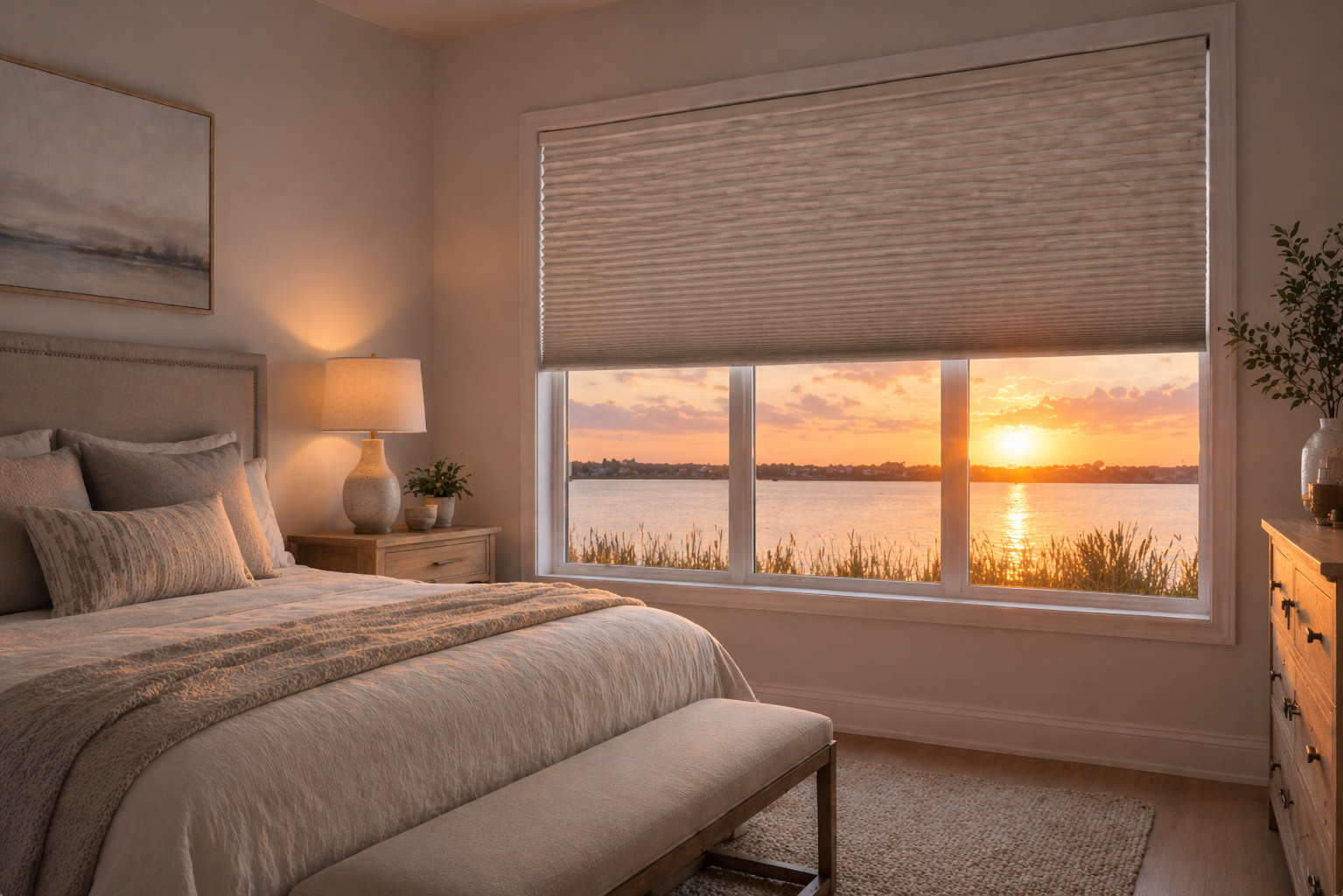
West facing windows can be one of the biggest challenges in a home, especially in hot climates. These windows receive intense afternoon sunlight, which can lead to excessive heat, glare, and fading of furniture and flooring.
Choosing the right window treatments can help block sunlight, reduce heat gain, and improve comfort during the hottest part of the day.
Explore our full range of premium window shades, custom window blinds, and interior plantation shutters, or learn more in our best window treatments for reducin heat gain guide.
Why West Facing Windows Are a Problem
Unlike east-facing windows that receive softer morning light, west-facing windows are exposed to strong, direct sunlight in the afternoon when temperatures are already at their highest. This can lead to:
- Increased indoor temperatures
- Glare on screens and surfaces
- Fading of furniture and flooring
- Higher cooling costs
The best window treatments for west-facing windows are designed to reduce both heat and glare while maintaining some level of light control.
Best Window Treatments for West Facing Windows
Cellular (Honeycomb) Shades
Cellular shades are one of the most effective options for west-facing windows because they provide insulation. Their honeycomb design traps air, helping to reduce heat transfer into your home.
- Excellent insulation
- Helps lower cooling costs
- Available in blackout and light-filtering options
Solar Shades
Solar shades are designed to block UV rays and reduce glare while still allowing you to see outside. For west-facing windows, lower openness fabrics (1–3%) are the most effective.
- Reduces glare without blocking the view
- Blocks UV rays
- Great for living rooms and offices
Blackout Shades
Blackout shades are ideal when maximum light blocking is needed. They are especially useful in bedrooms or media rooms where glare and heat need to be minimized.
Learn more: Do Blackout Shades Reduce Heat?
Roller Shades
Roller shades offer a clean, modern look and can be paired with blackout or solar fabrics for improved heat control. They are a strong option for larger west-facing windows.
Plantation Shutters
Plantation shutters provide a solid barrier against sunlight and can be adjusted to control light throughout the day. They are a durable and long-term solution for managing heat.
Layered Window Treatments
In some cases, combining two window treatments can provide the best results. For example, pairing solar shades with drapes or blackout shades can improve both insulation and light control.
Comparison of the Best Options
| Window Treatment | Heat Reduction | Glare Control | View Preservation | Best For |
|---|---|---|---|---|
| Cellular Shades | Excellent | High | Low | Insulation and energy efficiency |
| Solar Shades | Very Good | Excellent | High | Glare reduction with visibility |
| Blackout Shades | Very Good | Excellent | None | Maximum light blocking |
| Roller Shades | Very Good | High | Varies | Large windows and modern spaces |
| Plantation Shutters | Excellent | High | Moderate | Durability and long-term solution |
Tips for West Facing Windows
- Choose lighter-colored materials to reflect heat
- Use motorization to automatically block afternoon sun
- Consider dual-layer solutions for better control
- Close shades during peak afternoon hours
Which Option Is Best?
The best window treatment depends on your priorities:
- Best for insulation: Cellular shades
- Best for glare control: Solar shades
- Best for darkness: Blackout shades
- Best overall solution: Layered treatments
Explore Your Options
Continue comparing solutions with these guides:
- Best Window Treatments for Arizona Heat
- Double vs Single Cell Honeycomb Shades
- Roman Shades vs Cellular Shades
- Best Window Treatments for Energy Efficiency
- Top Insulating Window Blinds and Shades
- Best Window Coverings for Sunrooms
How to Shade West Facing Windows
West facing windows receive intense afternoon sun, which can lead to heat buildup, glare, and fading of furniture and flooring. Choosing the right window treatments can make a significant difference in comfort and energy efficiency.
The most effective way to shade west facing windows is to combine light control with heat reduction. This helps keep your space cooler while maintaining privacy and visibility.
Best Solutions for West Facing Windows
- Solar shades: Reduce glare and block UV rays while maintaining your view
- Cellular (honeycomb) shades: Provide insulation to help regulate indoor temperature
- Blackout shades: Ideal for bedrooms or rooms where maximum light blocking is needed
- Layered treatments: Combine shades with drapery for added light and heat control
For the best results, consider selecting materials designed to reduce solar heat gain, especially in rooms that receive strong afternoon sunlight.
Final Thoughts
West facing windows can bring in intense afternoon heat and sunlight, but the right window treatments can significantly improve comfort and reduce energy costs. By choosing options designed for heat reduction and glare control, you can create a more comfortable living environment even during the hottest part of the day.
West Facing Window FAQs
What are the best window treatments for west facing windows?
Cellular shades, solar shades, blackout shades, and plantation shutters are among the best options for reducing heat and glare from west-facing windows.
How do you reduce heat from west facing windows?
You can reduce heat by using window treatments that block sunlight, provide insulation, or reflect UV rays, such as cellular shades or solar shades.
Are blackout shades good for west facing windows?
Yes. Blackout shades are effective for blocking intense afternoon sunlight and reducing glare, especially in bedrooms or media rooms.
Do solar shades work for west facing windows?
Yes. Solar shades are one of the best options for reducing glare while still maintaining visibility to the outside.