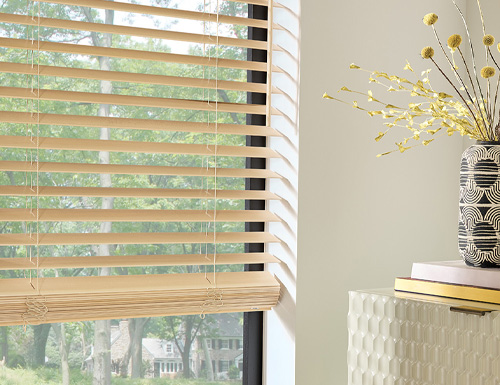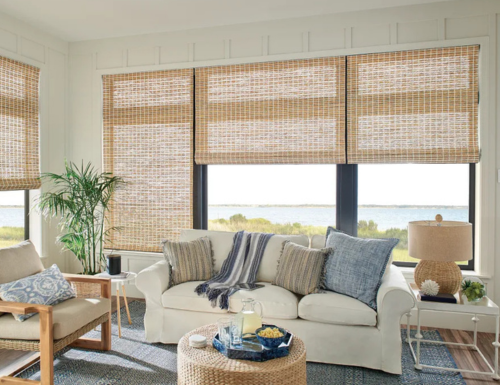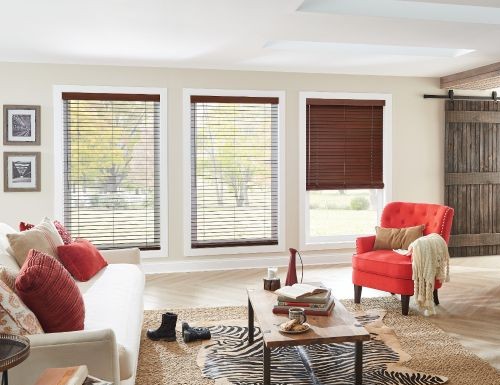









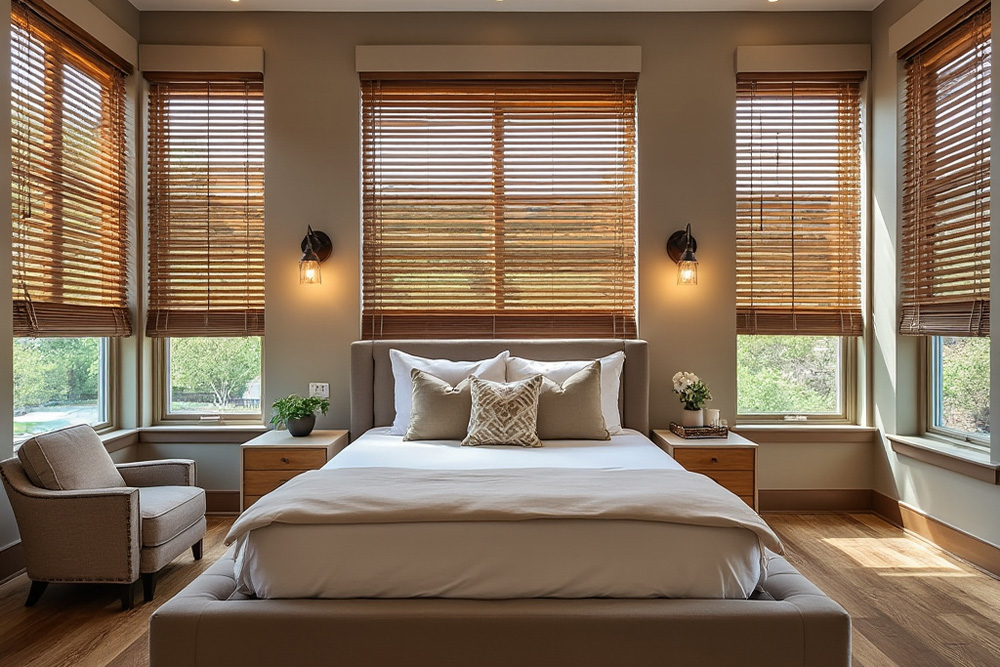
Wood blinds are horizontal window blinds made with slats that can be tilted to control light and privacy. They are known for their classic appearance, structured design, and natural material look, making them a popular choice for living rooms, bedrooms, dining rooms, and home offices.
In most cases, wood blinds refer to real wood blinds made from genuine hardwood or other natural wood materials. These blinds are designed to bring the warmth and character of natural wood to the window while offering the familiar function of a traditional horizontal blind.
If you want to browse available products, visit our custom made wood blinds category page. For a wider selection, explore durable and affordable premium blinds for windows for any home.
How Wood Blinds Work
Wood blinds use horizontal slats connected by cords, ladders, or other operating mechanisms. The slats can be tilted open or closed to adjust incoming light, reduce glare, and increase privacy throughout the day.
In addition to tilting, wood blinds can also be raised and lowered to expose more or less of the window. This combination of lift and tilt control makes them a flexible option for homeowners who want both privacy and adjustable natural light.
What Wood Blinds Are Made Of
Real wood blinds are made from natural wood materials rather than synthetic substitutes. The slats are cut, shaped, and finished to create a polished appearance that highlights the look of painted, stained, or natural wood grain.
Because they are made from genuine wood, these blinds are often chosen by homeowners who want a more authentic material look than faux wood alternatives. Their finish and grain pattern can add warmth and texture to a room in a way that manufactured materials may not fully replicate.
Key Characteristics of Wood Blinds
- Horizontal slats that tilt for light and privacy control
- Made from genuine wood rather than synthetic materials
- Available in a range of painted, stained, and natural finishes
- Often chosen for their classic, warm, and tailored appearance
- Commonly used in bedrooms, living rooms, dining rooms, laundry rooms, and offices
What Wood Blinds Look Like
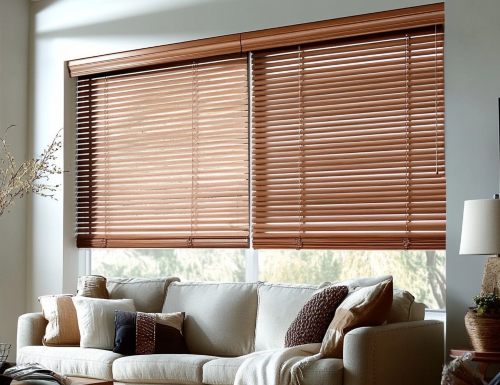
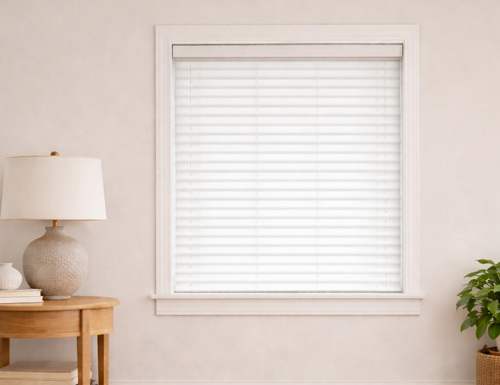
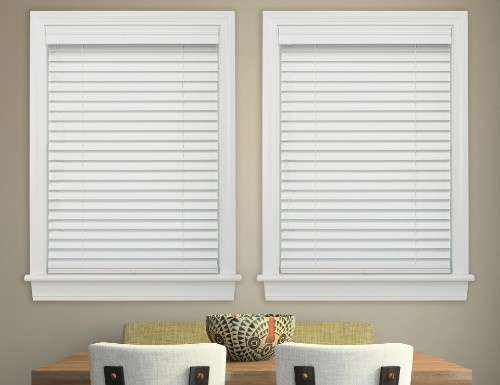
Wood blinds are known for their clean horizontal lines and natural visual texture. Depending on the finish, they can look traditional, rustic, transitional, or even modern. Painted white wood blinds offer a crisp, tailored appearance, while stained finishes showcase the natural character of the wood.
Their overall look is often more organic and higher-end than synthetic alternatives because natural wood has grain variation and depth that manufactured materials typically imitate rather than fully reproduce.
Where Wood Blinds Are Commonly Used
Wood blinds are commonly used in living rooms, bedrooms, dining rooms, home offices, and other interior spaces where homeowners want a classic window treatment with a natural material look. They are especially popular in rooms where style and finish are major priorities.
They are often selected for spaces that benefit from a more traditional or upscale appearance, although they can also work well in transitional and modern interiors depending on the finish and surrounding decor.
Wood Blinds vs Faux Wood Blinds
Wood blinds and faux wood blinds may look similar at a glance, but they are made from different materials. Real wood blinds use genuine wood, while faux wood blinds use synthetic or composite materials designed to mimic that appearance. Wood blinds excel with the natural beauty but are not as moisture resistant against high humidity as their faux wood counterpart. They are lighter weight than faux wood making them better for larger windows.
If you want to learn more about faux wood alternatives, read our What Are Faux Wood Blinds? guide.
Learn More About Wood Blinds
To continue exploring this topic, visit our Benefits of Real Wood Blinds page for a closer look at why homeowners choose them.
You can also browse our wood blinds category page and view our highest rated wood blinds.
Final Thoughts
Wood blinds are a classic horizontal blind option that combines adjustable light control with the look of genuine wood. By understanding what they are, how they work, and where they are commonly used, homeowners can better decide whether wood blinds are the right fit for their space and design goals.
Wood Blinds FAQs
What are wood blinds?
Wood blinds are horizontal window blinds made with real wood slats that can be tilted to control light and privacy. They are known for their classic appearance and natural material look.
Are wood blinds made from real wood?
Yes. Real wood blinds are made from genuine wood rather than synthetic or composite materials. They are designed to showcase the look and character of natural wood grain.
How do wood blinds work?
Wood blinds work by using horizontal slats that tilt open or closed for light and privacy control. They an also be raised and lowered to expose more or less of the window.
What is the difference between wood blinds and faux wood blinds?
The main difference is the material. Wood blinds are made from genuine wood, while faux wood blinds are made from synthetic or composite materials designed to imitate the look of wood.
Where are wood blinds commonly used?
Wood blinds are commonly used in living rooms, bedrooms, dining rooms, and home offices where homeowners want a natural, classic window treatment style.
Do wood blinds look different from faux wood blinds?
Yes. Wood blinds usually show more natural grain variation and depth because they are made from genuine wood, while faux wood blinds tend to have a more uniform manufactured finish.
Ready to upgrade your windows? Browse our full selection of custom wood blinds to find the right color, slat size, and lift option for your space.
Want to learn more to decide? Explore our wood blinds buying guides and expert advice for great tips, comparisons, and inspiration.


 (
(

 (
(