







Blackout shades can be worth it if you want better light control, improved privacy, and a darker room for sleeping, media rooms, nurseries, or shift-work schedules. They are especially useful in rooms where outside light affects comfort or daily routines.
The key is understanding what blackout shades do well, where they may not be necessary, and how they compare with room darkening shades.
Browse our selection of blackout and room darkening shades, or compare the differences in our guide to
light filtering vs blackout vs room darkening compared.
What Are Blackout Shades?
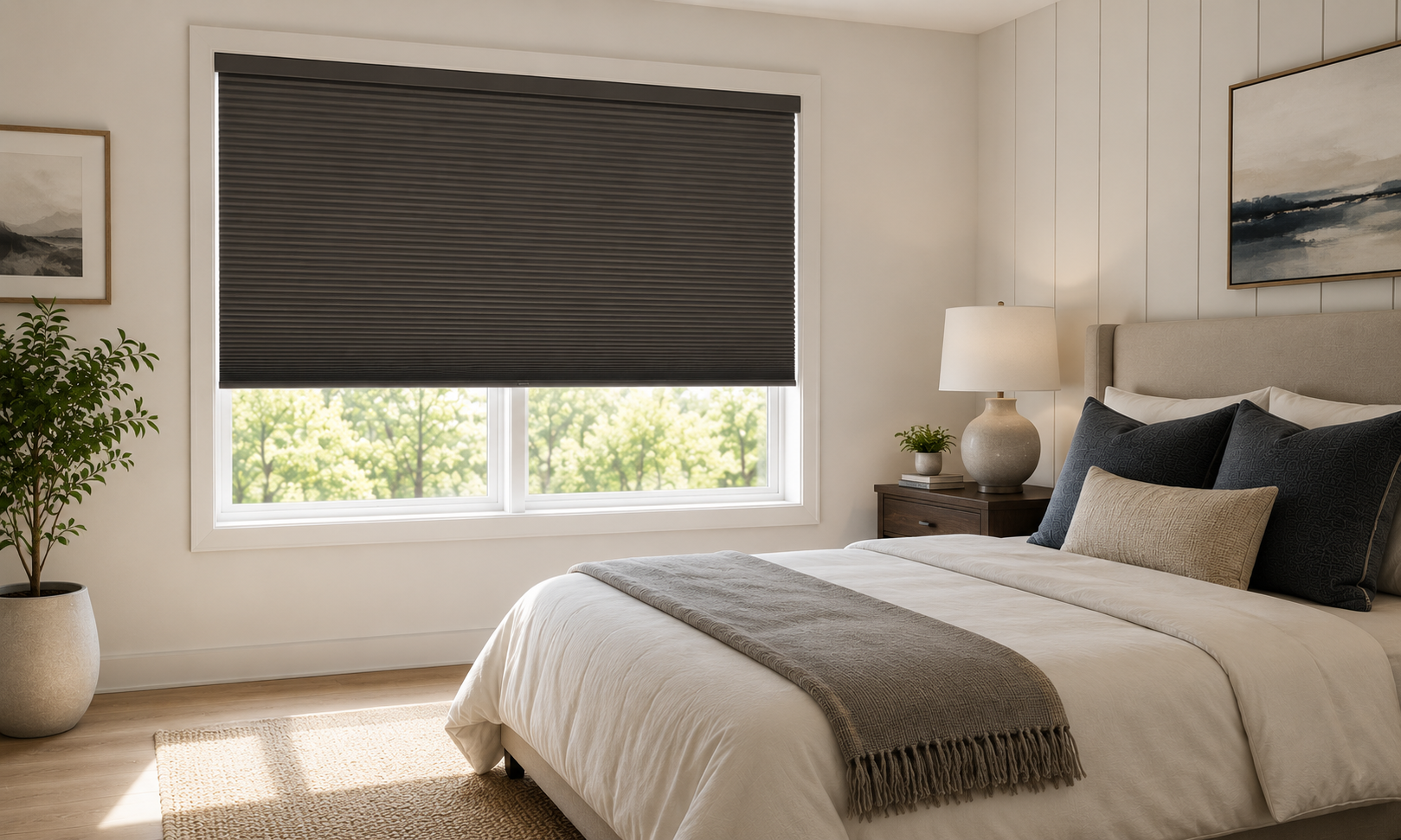
Blackout shades are window shades made with materials designed to block as much outside light as possible. They are commonly used in bedrooms, nurseries, media rooms, and other spaces where darkness is important.
It is important to note that blackout fabric blocks light through the material, but small light gaps may still appear around the edges, depending on how the shade is mounted and measured.
Benefits of Blackout Shades
1. Better Sleep Environment
Blackout shades are one of the best options for bedrooms because they help reduce outside light from streetlights, sunrise, headlights, and neighboring homes.
2. Improved Privacy
Blackout materials provide strong privacy when closed, making them a good choice for bedrooms, bathrooms, and street-facing windows.
3. Reduced Glare
Blackout shades can help reduce glare on televisions, monitors, and screens, which makes them useful in media rooms and home offices.
4. Potential Heat Reduction
Blackout shades may help reduce some heat transfer by blocking sunlight, especially on windows that receive direct sun.
Learn more in our guide: do blackout shades help reduce heat?
Drawbacks of Blackout Shades
1. They Can Make a Room Very Dark
In rooms where you want soft natural light during the day, blackout shades may feel too dark unless they are raised or paired with another light-filtering treatment.
2. They May Cost More Than Light Filtering Options
Blackout fabrics or liners may cost more than basic light-filtering materials depending on the product style and customization.
3. Edge Light Gaps Can Still Happen
Blackout shades reduce light through the fabric, but the fit and mounting style affect how much light enters around the sides.
For maximum coverage, outside mount shades may help reduce light gaps better than inside mount shades.
Blackout Shades vs Room Darkening Shades
Blackout shades block the most light, while room darkening shades reduce light without creating the same level of darkness. If you want a darker room for sleep or media use, blackout shades are usually the better choice. If you simply want to soften brightness, room darkening may be enough.
For a deeper comparison, see our guide to room darkening vs blackout shades.
| Need | Better Option |
|---|---|
| Maximum darkness | Blackout shades |
| Soft light reduction | Room darkening shades |
| Bedrooms and nurseries | Blackout shades |
| Living rooms | Room darkening or light filtering shades |
| Media rooms | Blackout shades |
When Blackout Shades Are Worth It
- You need a darker bedroom for better sleep
- You work nights or sleep during the day
- You have a nursery or child’s room
- You want better privacy at night
- You need glare control for a TV or media room
- Your windows receive strong direct sunlight
When Blackout Shades May Not Be Necessary
- You prefer natural light throughout the day
- You only need mild glare reduction
- You are covering a room where privacy is not a major concern
- You want the lowest-cost option available
Best Rooms for Blackout Shades
| Room | Why Blackout Shades Work Well |
|---|---|
| Bedroom | Creates a darker sleep environment |
| Nursery | Helps support naps and nighttime sleep |
| Media room | Reduces glare for screens |
| Home office | Controls glare and privacy |
| Street-facing rooms | Improves privacy when closed |
Are Blackout Shades Good for Heat Control?
Blackout shades can help reduce heat from direct sunlight, but their performance depends on the fabric, window direction, mounting style, and whether the shade has insulating properties.
If heat reduction is your main goal, compare blackout shades with other energy-focused options in our article about whether blackout shades reduce heat.
Shop Blackout and Room Darkening Shades
If you want stronger light control for bedrooms, nurseries, media rooms, or privacy-focused spaces, explore our collection of blackout shades and room darkening window treatments.
Explore More Light Control Guides
- Compare blackout and room darkening roller shades
- Blackout shades and heat reduction
- Light filtering, room darkening, and blackout shades explained
- Nursery window treatments for sleep and safety
Final Thoughts
Blackout shades are worth it for homeowners who need strong light control, privacy, and a darker room environment. They are especially valuable for bedrooms, nurseries, media rooms, and windows with direct sunlight.
If you only need moderate light reduction, room darkening shades may be enough. But if darkness, privacy, and glare control are priorities, blackout shades are often a smart investment. Shop our selection of the best privacy window treatments.
Blackout Shades FAQs
Are blackout shades worth it?
Blackout shades are worth it if you want a darker room, better privacy, reduced glare, and improved light control for bedrooms, nurseries, or media rooms.
Do blackout shades block all light?
Blackout fabric blocks most light through the material, but small light gaps may still appear around the edges, depending on the mount and fit.
Are blackout shades better than room darkening shades?
Blackout shades are better when maximum darkness is the goal. Room darkening shades are better when you want reduced light without making the room as dark.
Do blackout shades help reduce heat?
Blackout shades may help reduce heat from direct sunlight, but the amount depends on fabric type, window direction, mounting style, and insulation.