








Cold weather can make rooms uncomfortable, increase heating costs, and create noticeable drafts near windows. Because windows are often one of the largest sources of heat loss in a home, choosing the right window treatments can help improve comfort and energy efficiency throughout the winter months.
The best window treatments for cold weather provide insulation, reduce heat transfer, and help create a barrier between the cold glass and your living space.
Explore our collection of insulating window treatments and energy efficient window coverings designed to help improve comfort year-round.
Why Windows Matter During Cold Weather
Even modern windows allow some heat to escape during winter. Older windows, large glass areas, and drafty window openings can significantly increase heat loss and make rooms feel colder than the rest of the home.
Properly selected window treatments can help reduce this heat transfer and improve overall comfort near windows.
Best Window Treatments for Winter Insulation
1. Cellular Shades
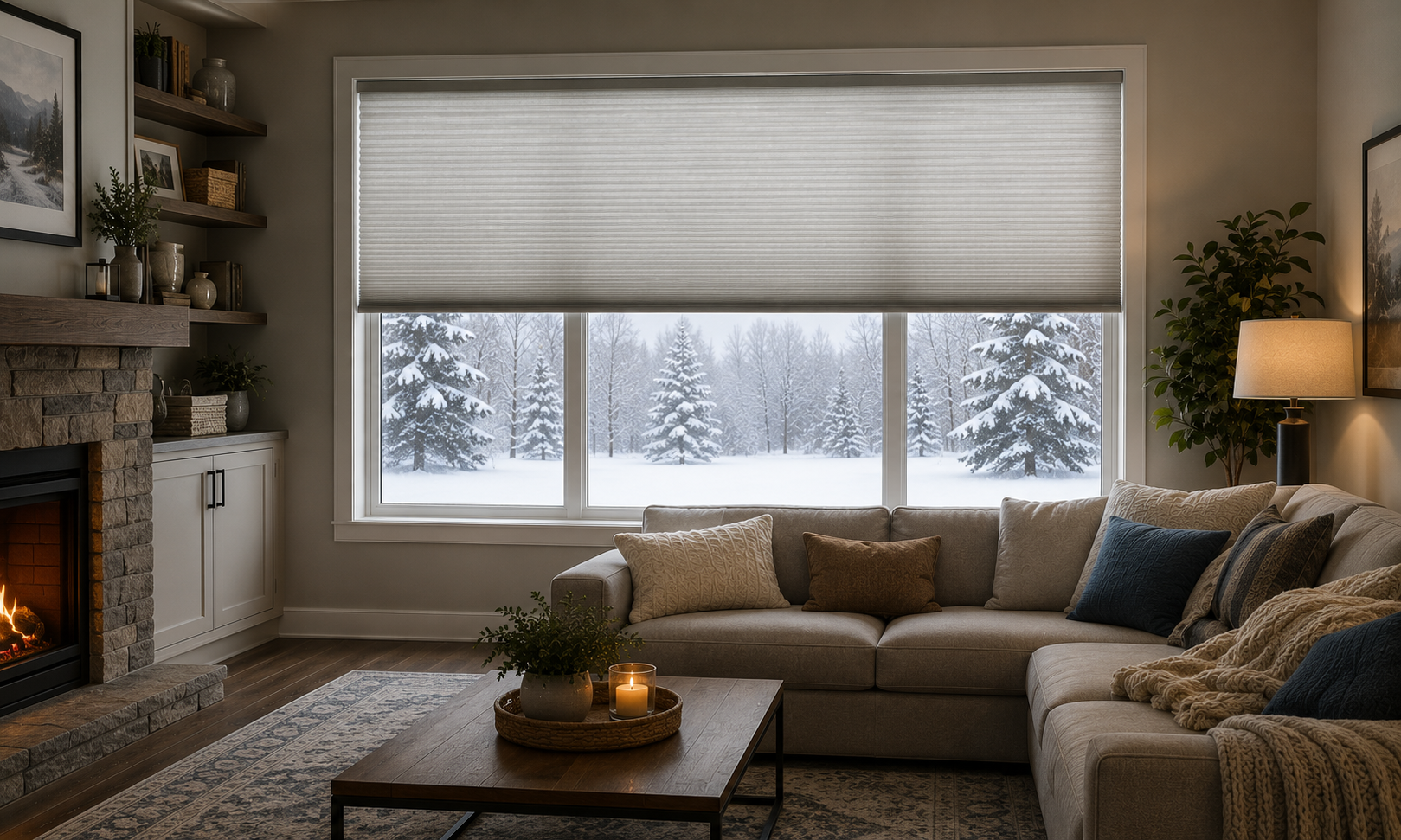
Cellular shades are widely considered one of the best window treatments for cold weather. Their honeycomb-shaped cells trap air and create an insulating barrier that helps reduce heat loss through windows.
- Excellent insulation performance
- Helps reduce drafts
- Available in single-cell and double-cell designs
- Suitable for most window types
Learn more: Do Cellular Shades Save Energy?
2. Double-Cell Cellular Shades
Double-cell cellular shades contain two layers of insulating air pockets, making them one of the most energy-efficient window treatment options available.
Homeowners in colder climates often choose double-cell shades for maximum insulation performance.
3. Cellular Shades with Side Tracks
Side tracks help reduce gaps along the edges of the shade, improving insulation and reducing air movement around the window.
This combination can provide some of the strongest thermal performance available in a window covering.
4. Plantation Shutters
Plantation shutters provide solid coverage and can help reduce heat loss when closed. Composite and wood shutters create an additional barrier between the room and the window.
Shutters are particularly popular for homeowners seeking a long-lasting and permanent-looking window treatment.
5. Roman Shades with Insulating Liners
Roman shades made with heavier fabrics or insulating liners can help reduce drafts and improve comfort during winter.
The added fabric layers create a more substantial barrier than many traditional blinds.
6. Layered Window Treatments
Combining shades with decorative drapery panels can increase insulation by adding multiple layers over the window.
This approach is often used in particularly cold climates where maximizing comfort is important.
Best Window Treatments for Drafty Windows
| Window Treatment | Draft Reduction | Insulation Performance |
|---|---|---|
| Double-Cell Cellular Shades | Excellent | Excellent |
| Cellular Shades with Side Tracks | Outstanding | Outstanding |
| Plantation Shutters | Very Good | Very Good |
| Roman Shades with Liner | Good | Good |
| Layered Treatments | Very Good | Very Good |
Cellular Shades vs Shutters for Cold Weather
Both cellular shades and shutters can improve comfort during winter, but cellular shades typically provide better insulation due to their honeycomb cell construction.
Shutters remain an excellent option for homeowners who prioritize durability, aesthetics, and long-term value.
Related guide: Are Blinds More Energy Efficient Than Shutters?
Can Window Treatments Lower Heating Costs?
Energy-efficient window treatments may help reduce heating costs by minimizing heat loss through windows. Actual savings vary depending on climate, window quality, home insulation, and heating system usage.
Homes with older windows or large glass areas often experience the greatest benefits from improved window insulation.
Estimate potential savings: Energy Savings Calculator
Cold Weather vs Hot Weather Window Treatments
Fortunately, many of the same window treatments that help during winter also improve comfort during summer.
- Cellular shades help reduce winter heat loss and summer heat gain.
- Solar shades help manage sunlight and heat during warmer months.
- Layered treatments provide year-round comfort benefits.
Learn more: Best Window Treatments for Arizona Heat
What Makes a Window Treatment Energy Efficient?
- Honeycomb or cellular construction
- Multiple layers of material
- Insulating liners
- Reduced air gaps around the window
- Proper fit and installation
Learn more: Best Insulating Window Treatments
Best Rooms for Insulating Window Treatments
- Bedrooms
- Living rooms
- Home offices
- Sunrooms
- Rooms with large windows
- Older homes with drafty windows
Related Energy Efficiency Resources
- Best Insulating Window Treatments
- Energy Efficient Window Treatments
- Do Cellular Shades Save Energy?
- Best Window Treatments for Arizona Heat
- Noise Reduction vs Energy Efficient Window Treatments
- Energy Savings Calculator
Final Thoughts
The best window treatments for cold weather help reduce heat loss, improve comfort, and support lower heating costs. Cellular shades are often considered the top choice because of their insulating honeycomb design, while shutters, Roman shades, and layered window treatments can also provide meaningful benefits.
Choosing energy-efficient window treatments can make rooms feel warmer, reduce drafts, and improve comfort throughout the winter season.
Cold Weather Window Treatment FAQs
What are the best window treatments for cold weather?
Cellular shades are often considered the best window treatments for cold weather because their honeycomb cells help reduce heat loss and improve insulation.
Do cellular shades help keep rooms warm in winter?
Yes. Cellular shades trap air within their honeycomb cells, helping reduce heat transfer through windows and improve winter comfort.
Do window treatments help reduce heating costs?
Energy-efficient window treatments may help reduce heating costs by reducing heat loss through windows and improving insulation.
Are shutters or cellular shades better for cold weather?
Both can improve comfort, but cellular shades generally provide greater insulation due to their honeycomb construction.
What window treatments help reduce drafts?
Cellular shades, especially double-cell shades and shades with side tracks, are among the most effective window treatments for reducing drafts.