









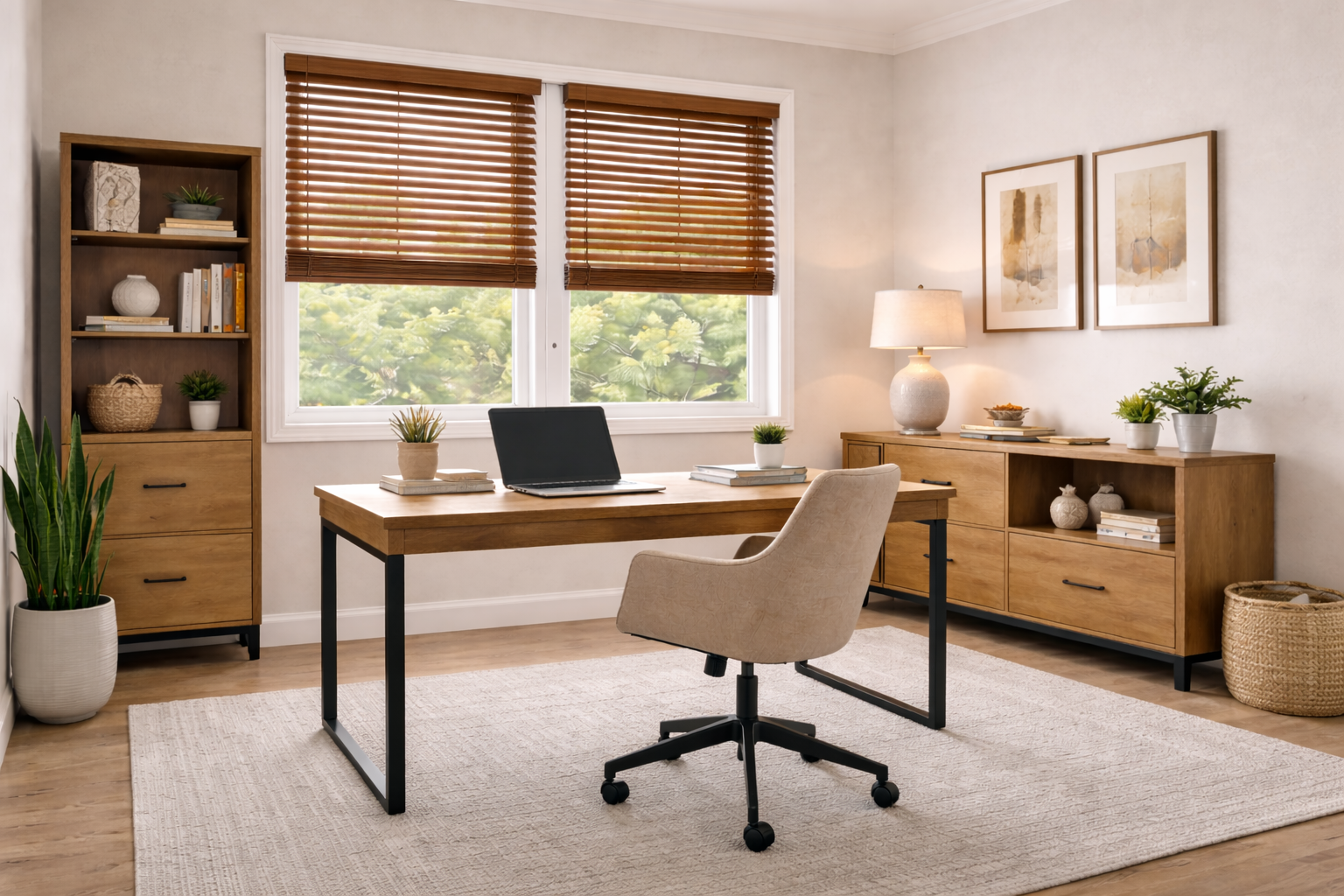
Wood blinds are a classic window treatment known for their natural appearance and distinctive style. If you are exploring different custom built wood blinds for your home, it helps to understand where they perform well and where they may be less practical.
This guide focuses specifically on the pros and cons of wood blinds so you can compare their strengths and limitations based on your room, environment, and window treatment needs.
Explore our complete selection of custom made wood blinds. Compare features and styles across our full line of customizable window blinds today.
What Are Wood Blinds?
Wood blinds are horizontal blinds made from real wood slats. They are designed to tilt open and closed for light control and privacy, and they are available in a range of stains, painted finishes, and slat sizes. Their appearance makes them a popular choice in living rooms, dining rooms, offices, and bedrooms. For even more information, read our article on What are real wood blinds?
Pros of Wood Blinds
Natural Wood Appearance
One of the main pros of wood blinds is their authentic natural look. Real wood has unique grain patterns, texture, and warmth that can give a room a more traditional, elevated, or finished appearance.
Strong Light Control
Wood blinds allow you to adjust the slats for flexible light control. You can tilt them to let in some daylight, reduce glare, or close them more fully for privacy.
Wide Range of Finishes
Wood blinds are available in many stains and painted colors, which makes it easier to match trim, flooring, furniture, or existing décor.
Crisp, Structured Look
Because of their solid slat construction, wood blinds create a tailored and structured appearance at the window. This makes them a common option for rooms where a more defined window treatment style is preferred.
Suitable for Many Living Spaces
Wood blinds are often used in bedrooms, living rooms, dining rooms, and home offices where moisture is less of a concern and appearance is a major consideration.
Cons of Wood Blinds
Not Ideal for Humid Rooms
One of the biggest cons of wood blinds is that real wood is not usually the best choice for high-moisture areas. Bathrooms, laundry rooms, and some kitchens may expose wood blinds to humidity that can affect the material over time.
Heavier Than Some Alternatives
Real wood blinds can be heavier than some other blind materials. On larger windows, that added weight can affect operation and may influence which lift option works best.
Usually Higher Priced Than Faux Wood
Wood blinds often cost more than faux wood blinds and other synthetic alternatives. For shoppers comparing materials, price can be a major deciding factor.
Regular Dusting Is Needed
Like most horizontal blinds, wood blinds require regular dusting because the slats can collect dust over time. Cleaning each slat can take more effort than maintaining some other window treatments.
May Not Fit Every Room Style
While wood blinds work well in many interiors, they are not always the best match for every space. Some rooms may be better suited to softer shades, moisture-resistant faux wood, or more minimal modern window treatments.
When Wood Blinds Make More Sense
Wood blinds are more commonly used in rooms where moisture is limited and where the look of real wood complements the space. They are often considered for living rooms, dining rooms, bedrooms, and offices where style and adjustable light control are important.
When Another Window Treatment May Be Better
In high-humidity rooms or on windows where moisture resistance is important, another material may be more practical. Homeowners comparing materials often also look at faux wood blinds, composite blinds, or shades depending on the needs of the room.
If you want to compare materials directly, see our guide on wood blinds vs faux wood blinds.
Final Thoughts on the Pros and Cons of Wood Blinds
The pros and cons of wood blinds depend largely on where they will be used and what features matter most to you. They offer a natural appearance, adjustable light control, and a structured window treatment style, but they can also come with higher cost, added weight, and limitations in humid spaces.
Learn More About Wood Blinds
- What are Wood Blinds
- How to Care and Maintain Wood Blinds
- Room by Room Guide for Wood Blinds
- Wood Blinds Upgrades
- Wood Blinds Expert Advice Hub
Frequently Asked Questions
What are the pros of wood blinds?
Common pros of wood blinds include their natural appearance, adjustable light control, wide range of finishes, and structured look at the window.
What are the cons of wood blinds?
Common cons of wood blinds include higher cost compared to some alternatives, heavier weight, regular dusting, and reduced suitability for humid rooms.
Are wood blinds good for bathrooms?
Wood blinds are generally not the best choice for bathrooms because high humidity and moisture can affect real wood over time.
Do wood blinds require a lot of cleaning?
Wood blinds need regular dusting because dust can collect on each slat. Like other horizontal blinds, they usually require more hands-on cleaning than some fabric shades.
Are wood blinds heavier than faux wood blinds?
Real wood blinds can be heavy, especially on larger windows. Weight varies by product, slat size, and window dimensions, but lift style can be an important consideration.
Shop our collection of real wood blinds to discover timeless window treatments that offer natural beauty, durability, and excellent
For more information, visit our wood blinds expert advice hub, where you’ll find in-depth guides and expert advice.