







Browse our expert advice articles below to learn more about styles, features, and how they compare to other window treatments.
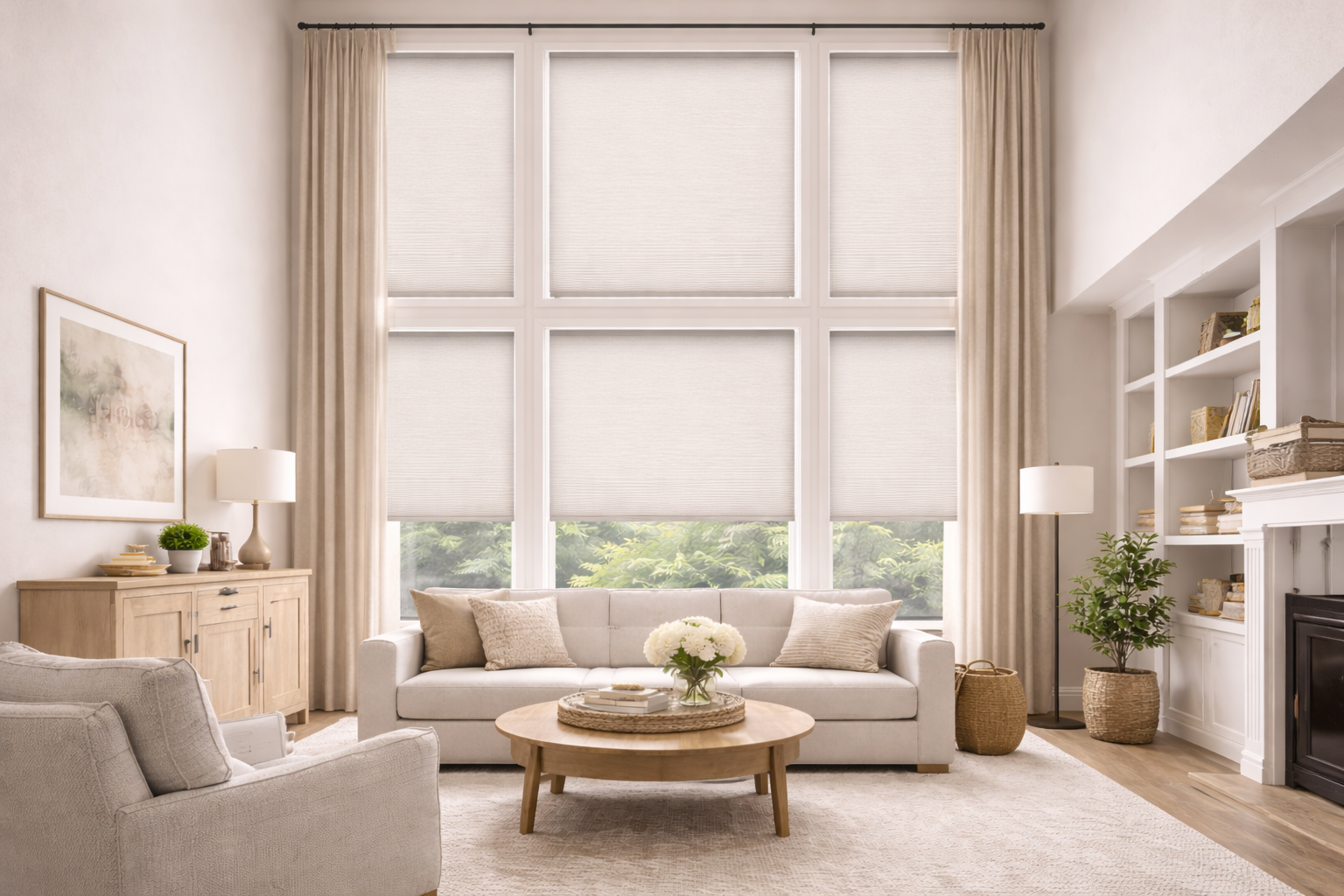
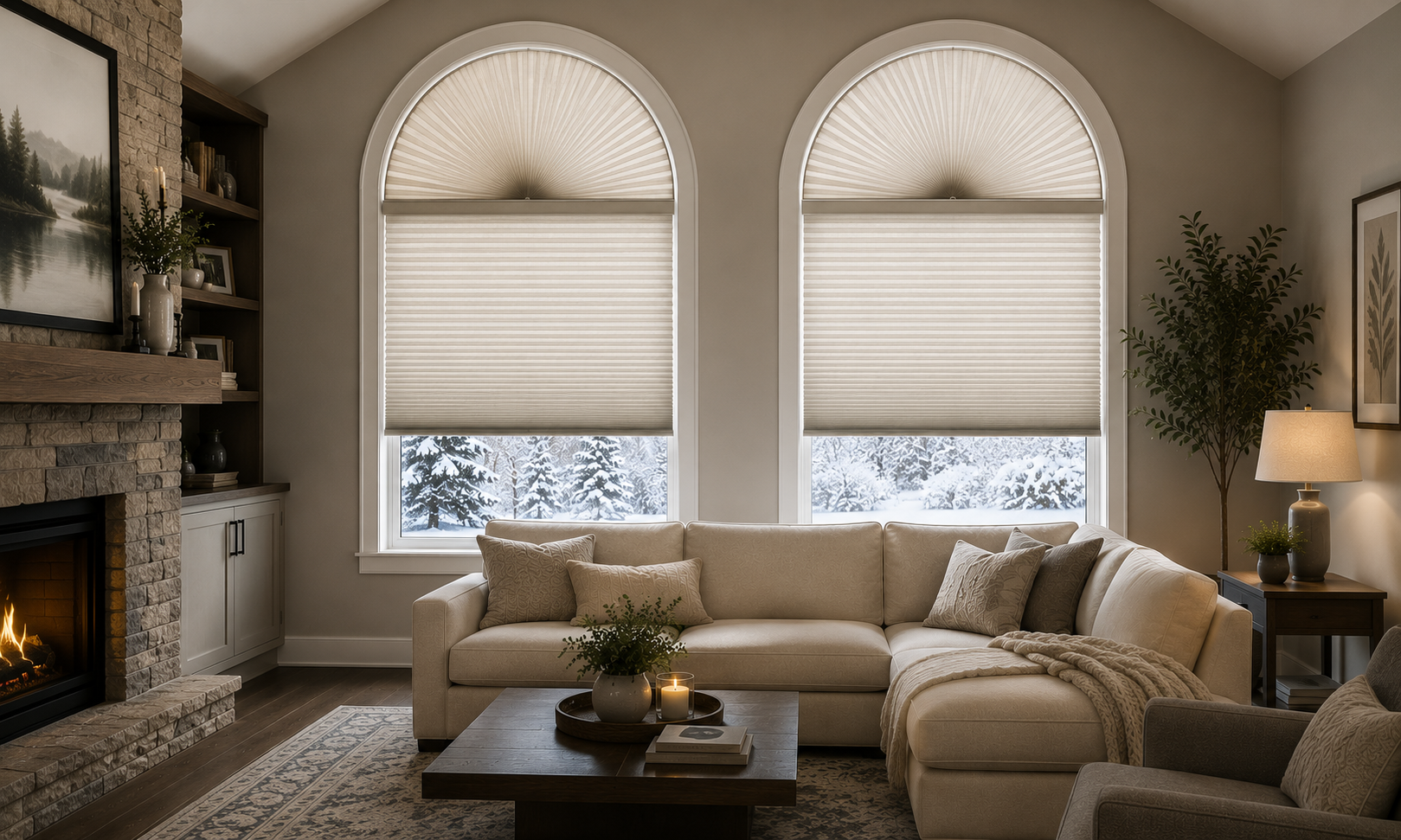
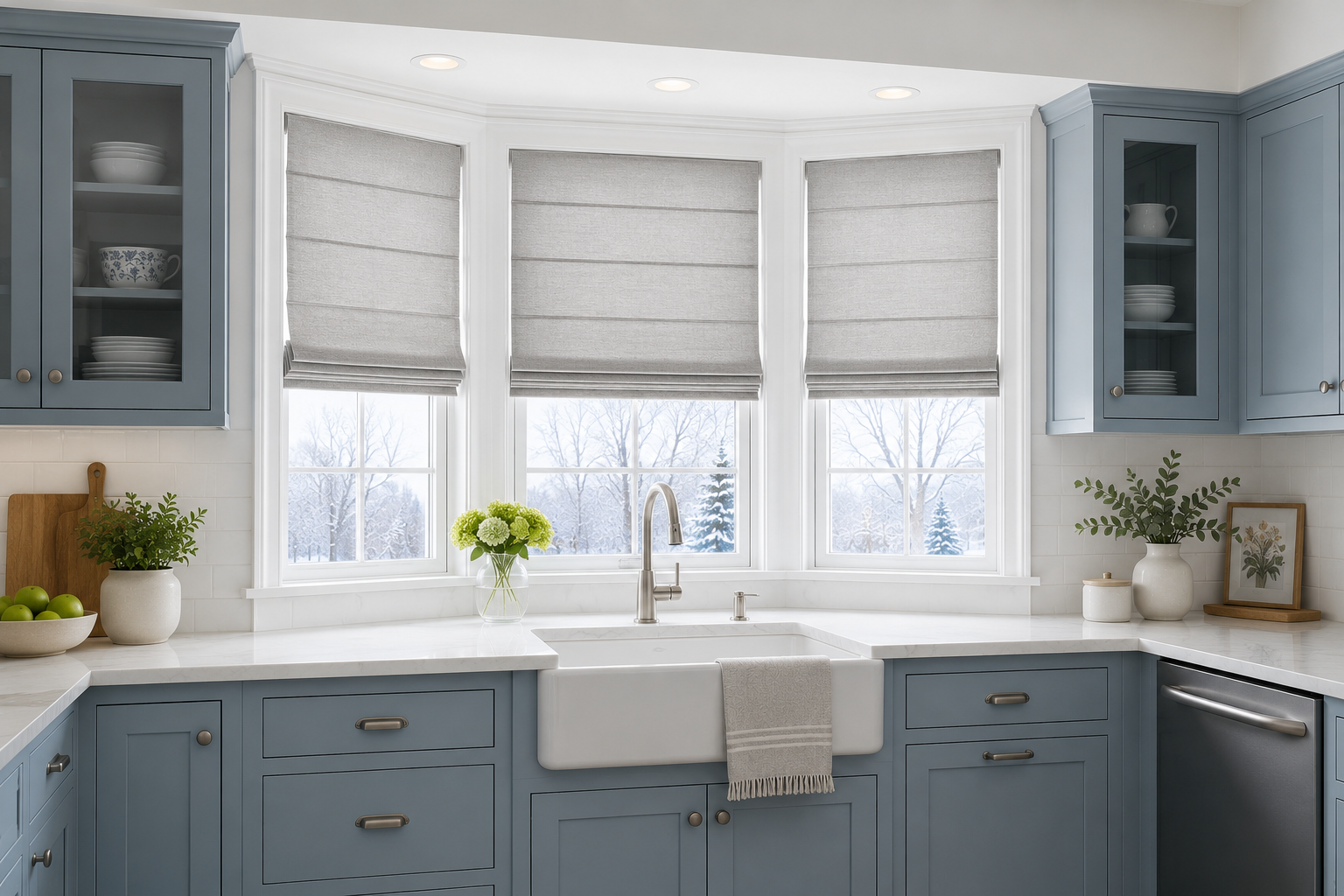
Our Specialty Window Treatment Resource Center brings together practical buying guides, product comparisons, measuring advice, installation considerations, and room-specific recommendations. These resources can help you understand which custom window blinds, custom window shades, and plantation shutters may work for unusually shaped, oversized, difficult-to-reach, or architecturally distinctive windows.
Specialty windows should be evaluated individually. The best treatment depends on the exact dimensions, shape, mounting surface, surrounding trim, operating height, window movement, desired privacy, and product limitations. A solution that works well for one arch, bay, or large window may not be appropriate for another.
New to Specialty Window Treatments? Start Here
Begin with our introductory guides to learn how window shape, size, depth, and location affect product selection. Specialty windows may require templates, divided treatments, fixed coverings, custom tracks, extension controls, or professional measuring and installation.
These resources explain which information to gather before ordering and when a specialty product may be preferable to adapting a standard blind or shade.
What Are Specialty Window Treatments?
Specialty window treatments are blinds, shades, shutters, or related products designed or adapted for windows that fall outside common rectangular sizes and installations. The term may refer to unusual shapes, oversized openings, projecting window arrangements, doors, skylights, or windows that are difficult to access.
Common specialty applications include:
- Large and oversized windows
- Bay and bow windows
- Arched and half-circle windows
- Angled, triangular, and trapezoid windows
- Octagon and other geometric windows
- Skylights and ceiling windows
- French doors and patio doors
- Sliding glass doors
- Corner windows
- Clerestory and high windows
- Floor-to-ceiling windows
- Windows with deep trim, handles, or limited mounting space
Some specialty products remain fully operable, while others are fixed in position. Exact capabilities depend on the shape, dimensions, material, manufacturer, and selected window treatment.
How to Choose Window Treatments for Unusual Windows
Start by identifying the feature that makes the window unusual. A large rectangular window presents different challenges than an arch, bay, skylight, or angled opening. Size may affect product weight, while shape may determine whether the treatment can operate.
Before comparing products, consider:
- The exact width, height, depth, and shape
- Whether the window opens, tilts, cranks, or slides
- Available mounting surfaces
- Trim, handles, locks, and other obstructions
- Privacy and light-control goals
- Whether the treatment needs to open fully
- How the product will be reached and operated
- Whether multiple treatments can be used instead of one
- Whether a template or professional measurement is required
Product specifications should be reviewed before final measurements are taken because different blinds and shades have different depth, size, and shape requirements.
Window Treatments for Large Windows
Large windows provide expansive views and abundant natural light, but they can also create glare, heat, privacy concerns, and challenges related to product weight. A single oversized blind or shade may be difficult to manufacture, ship, install, or operate.
Roller shades, solar shades, vertical blinds, panel track blinds, cellular shades, drapery, and shutters may all be considered depending on the opening. Dividing a large window into multiple treatments can reduce weight and provide more flexible control.
When planning a divided installation, align the treatment breaks with window mullions whenever possible. This can make the finished appearance feel more intentional and reduce visible light gaps. Shop window treatments ideal for large or oversize windows.
Best Blinds and Shades for Wide Windows
Wide windows require products that remain stable and level across the opening. Excessive width can cause fabric deflection, rail bowing, difficult operation, or limits on available lift systems.
Solar and roller shades provide a simple appearance, while vertical blinds and panel track systems are designed to move horizontally across wide openings. Drapery can also cover substantial widths and stack beyond the window when enough wall space is available.
For very wide windows, compare the benefits of one large treatment with two or more smaller treatments mounted side by side. Multiple shades may be easier to operate and replace, but narrow gaps can remain between adjacent fabrics. Shop multiple window blinds on a shared headrail.
Window Treatments for Tall Windows
Tall windows can be difficult to operate manually, especially when the bottom rail or controls move beyond comfortable reach. Product weight also increases as the treatment becomes taller.
Motorized roller, solar, cellular, Roman, and specialty shades are often considered for tall openings. Manual options may use continuous-loop controls, extension poles, or other assisted systems depending on the product.
For information about power options, remotes, batteries, and hardwiring, visit our Motorized Window Treatment Resource Center.
Window Treatments for Floor-to-Ceiling Windows
Floor-to-ceiling windows create dramatic views but may introduce significant glare, heat, UV exposure, and nighttime privacy concerns. Product selection should account for the full height of the opening, accessibility, and the amount of space available for the treatment when open.
Solar shades can reduce glare while preserving daytime views, while roller shades, drapery, vertical blinds, and panel track blinds provide different levels of privacy and coverage. Motorization may make large treatments easier to operate consistently.
Consider dividing very tall glass into multiple shades when window mullions or structural divisions make that possible.
Window Treatments for Bay Windows
Bay windows project outward from the home and generally contain three or more window sections installed at angles. Each section is usually covered separately so the treatments can follow the shape of the bay.
The main challenge is preventing adjacent headrails, fabrics, slats, handles, or mounting brackets from interfering with one another at the corners. Precise measurements and adequate clearance are essential.
Cellular shades, Roman shades, roller shades, wood blinds, faux wood blinds, shutters, and drapery can all work in bay windows. The best option depends on window depth, trim, angle, and whether each window needs to operate independently.
How to Measure Bay Windows
Bay windows should generally be measured as a coordinated group rather than as unrelated individual windows. The angle between each section affects how wide the treatments can be without colliding.
Determine where the front edges of the products will meet at each corner. Headrail depth and projection are just as important as window width. A deeper blind or shade may need a larger deduction at the angled intersection.
Because product dimensions vary, choose the intended window treatment before calculating final bay-window measurements. Professional measuring may be appropriate when the angles, trim, or mounting surfaces are complex. Learn more about how to measure a bay window for window blinds.
Window Treatments for Bow Windows
Bow windows create a curved appearance using four or more window sections. Like bay windows, they are usually covered with multiple individual treatments rather than one curved blind or shade.
The narrower angles between bow-window sections can make product clearance especially important. Compact headrails and treatments with limited projection may fit more easily than deep products.
Cellular shades, roller shades, pleated shades, and selected blinds can provide a clean appearance across the individual sections. Drapery may be mounted across the entire opening when the architecture and available wall space allow it.
Bay Windows vs Bow Windows
Bay windows usually contain three primary sections with sharper angles, while bow windows use a greater number of sections to create a softer curve. Both require careful planning at the corners where adjacent treatments meet.
Bay windows may provide more mounting depth and distinct individual openings. Bow windows often have narrower sections and tighter clearances, which can limit headrail size and product projection.
The correct treatment depends on the actual construction rather than the window’s general label.
Window Treatments for Arched Windows
Arched windows add architectural character but can be challenging to cover because the top of the opening is curved. Common shapes include perfect arches, eyebrow arches, quarter arches, and elongated arches.
Cellular shades, shutters, wood blinds, faux wood blinds, and specialty fabric treatments may be available for selected arch shapes. Some products remain fixed, while others can partially or fully operate.
A template may be required because small variations in the curve can affect fit. Do not assume that an arch is symmetrical or that its radius can be calculated accurately from width and height alone.
Fixed vs Operable Arch Window Treatments
Fixed arch treatments remain in one position and provide continuous coverage. They are generally simpler and may be available for a wider range of shapes and materials.
Operable arch treatments allow some or all of the covering to open, but options may be limited by the shape and product design. Selected cellular arches, shutters, and specialty blinds may provide adjustable or movable sections.
Consider whether the arch needs regular access to daylight and outdoor views. A fixed product may be appropriate for a high decorative window that is rarely adjusted, while an operable treatment may be worth the additional complexity on a primary window.
Window Treatments for Half-Circle Windows
Half-circle windows are common above doors and rectangular windows. They may be covered independently or coordinated with the treatment below.
Specialty cellular shades and shutters are popular options because they can be formed to follow the curved opening. Wood and faux wood arch treatments may also be available within specific size limits.
When the half-circle sits above another window, consider whether both treatments should use the same color, material, and level of light control.
Window Treatments for Eyebrow Arches
Eyebrow arches have a shallow curve rather than a complete half-circle. Their proportions vary significantly, so custom templates are commonly needed.
Product selection may be more limited than for a standard arch. Shutters, cellular materials, and fixed specialty treatments are often considered, depending on the exact shape.
Because eyebrow windows may not be symmetrical, measure and template the actual opening rather than relying on architectural plans alone.
Window Treatments for Angled Windows
Angled windows have one or more sloped sides and are often found in vaulted rooms, contemporary homes, lofts, and spaces beneath rooflines. Common forms include triangles, trapezoids, and parallelograms.
Specialty cellular shades, shutters, and selected blinds may be manufactured for angled openings. Some are stationary, while others can move along the straight or sloped portion of the window.
The degree of angle, product orientation, gravity, and mounting surface all affect whether the treatment can operate.
Window Treatments for Triangle Windows
Triangle windows may have one horizontal base and two angled sides or may form a right triangle along a sloped ceiling. These windows are commonly covered with fixed cellular shades, shutters, or custom specialty products.
Operable options can be limited because the treatment narrows as it moves toward the point. A fixed covering may provide the most consistent privacy and light control when the window does not require frequent adjustment.
Templates and exact angle measurements are often required.
Window Treatments for Trapezoid Windows
Trapezoid windows contain a sloped top or side with a wider flat section. They are frequently found near vaulted ceilings and rooflines.
Cellular shades are one of the most common solutions because the fabric can be formed to fit the angled shape. Shutters may also be custom manufactured for selected trapezoid windows.
Some trapezoid shades can operate across part of the window, while others remain stationary. Exact capabilities depend on the angle, dimensions, and manufacturer.
Window Treatments for Octagon and Geometric Windows
Octagon, hexagon, diamond, and other geometric windows are often used as architectural accents. Because these openings are frequently small or placed high on a wall, fixed treatments may be appropriate.
Custom shutters, cellular shades, and specialty fabric inserts can provide privacy and light control while following the window’s shape. Templates are commonly required because geometric openings may not have equal sides or perfect angles.
Consider whether leaving the window uncovered is acceptable. Decorative or high-positioned geometric windows may not require a treatment unless glare, fading, heat, or privacy is a concern.
Window Treatments for Corner Windows
Corner windows meet at or near a room’s corner and may include a structural post or uninterrupted glass. Treatments installed on each side must be planned so the headrails, fabrics, slats, and controls do not collide.
Roller shades, solar shades, cellular shades, blinds, and drapery may all be used. Small gaps are often necessary where two treatments meet, especially when both need to move independently.
Motor direction, control placement, fabric roll, and mounting depth should be coordinated across both windows.
Window Treatments for Clerestory Windows
Clerestory windows are installed high on a wall to bring daylight into a room while maintaining privacy at eye level. Although they may not require privacy coverings, they can create glare, fading, and heat gain.
Motorized roller, solar, and cellular shades are common choices because the windows are difficult to reach manually. Fixed solar-control films or specialty treatments may also be considered depending on the desired performance.
Power and control planning should be completed before installation, particularly when hardwired motors are preferred.
Window Treatments for Hard-to-Reach Windows
Windows above stairs, behind furniture, near vaulted ceilings, or high on walls may be difficult or unsafe to operate manually. Motorization, extension controls, and long operating wands can provide safer access.
The best option depends on the product, height, window size, frequency of operation, and available power. A fixed treatment may be appropriate when the window only requires permanent glare or UV control.
For additional guidance, explore our Motorized Window Treatment Resource Center and Smart Home Window Treatment Resource Center.
Window Treatments for Skylights
Skylights bring daylight from above but can also contribute to heat, glare, UV exposure, and unwanted brightness. Standard blinds and shades cannot simply hang vertically in these openings, so skylight treatments often use side tracks, tension systems, or specialty mounting hardware.
Cellular and roller-style skylight shades may be available with manual or motorized operation. Blackout fabrics are popular in bedrooms, while light-filtering materials can soften overhead sunlight in living spaces.
Visit our Skylight Shade Resource Center for information about fabrics, measuring, motorization, heat control, and installation. Shop our selection of window shades for skylight windows.
Window Treatments for French Doors
French doors contain glass panels and usually require treatments mounted directly to each door. The product must remain secure when the door opens and closes and should not interfere with handles, locks, hinges, or door movement.
Cellular shades, roller shades, Roman shades, blinds, shutters, and door-mounted treatments may all be considered. Hold-down brackets can help prevent the bottom rail from swinging.
Low-profile products are often preferred where clearance around handles is limited. Learn how to measure a frech door for window blinds.
Window Treatments for Sliding Glass Doors
Sliding glass doors require treatments that provide privacy and light control without preventing regular access. The operating direction of the treatment should coordinate with the door panel that opens.
Vertical blinds, panel track blinds, drapery, vertical cellular shades, and wide roller or solar shades are common options. Each provides a different balance of stack size, appearance, privacy, and ease of access.
Visit our Panel Track Blind Resource Center and Vertical Blind Resource Center for product comparisons.
Window Treatments for Patio Doors
Patio doors may include sliding doors, hinged doors, or large multi-panel glass systems. The correct treatment depends on how the door opens, where handles are located, and how much space is available beside or above the opening.
Treatments that move horizontally are often convenient for sliding doors, while low-profile shades or blinds can work on hinged doors. Large multi-panel systems may require multiple coordinated shades or drapery tracks.
Window Treatments for Sidelights
Sidelights are narrow windows installed beside an entry door. They often create privacy concerns while providing useful natural light.
Cellular shades, roller shades, mini blinds, shutters, and specialty sidelight treatments can be custom sized for narrow openings. Top Down Bottom Up operation may be useful when privacy is needed at eye level but daylight from above is desired.
Check handle, trim, and door-clearance requirements before selecting the mounting method. Shop the best blinds for sidelight windows.
Window Treatments for Transom Windows
Transom windows are installed above doors or larger windows. They may be rectangular, arched, or another specialty shape.
Because transoms are often high and difficult to reach, fixed or motorized treatments may be the most practical. The transom can be coordinated with the treatment below or covered independently.
Consider whether the window actually needs to be covered. In some rooms, leaving the transom open preserves daylight while the lower window treatment provides adequate privacy.
Window Treatments for RV and Motorhome Windows
RV windows often have shallow mounting depth, unusual dimensions, curved corners, and nearby cabinets or furniture. Products must also remain secure while the vehicle is moving.
Roller shades, cellular shades, pleated shades, and specialty RV treatments may be available. Side tracks, hold-downs, compact headrails, and lightweight materials can improve performance in mobile environments.
Explore our RV Blinds and Shades Resource Center for detailed buying and installation guidance. Shop Shop blinds and shades for RVs and Motoromes.
Choosing Between One Large Treatment and Multiple Treatments
Oversized or grouped windows can often be covered with one large product or several smaller treatments. One treatment provides a continuous appearance but may be heavier, more expensive, and harder to operate.
Multiple treatments can align with individual window sections, reduce weight, and allow independent light control. However, gaps may remain between products, and additional controls or motors may be required.
Consider appearance, window mullions, weight, replacement cost, motorization, and how the room will be used before deciding. Explore 2 or 3 window blinds on a shared headrail.
Fixed vs Operable Specialty Window Treatments
Fixed treatments remain permanently in one position and are commonly used on unusual shapes that cannot support normal movement. They provide continuous privacy, glare reduction, or decorative coverage.
Operable products allow the window to be exposed when desired but may have stricter shape and size limitations. They may also require additional rails, tracks, motors, or controls.
A fixed treatment is often practical for high accent windows, while an operable solution may be preferable for primary windows where daylight and views need to change throughout the day.
Privacy and Light Control for Specialty Windows
Specialty windows often create unique privacy and lighting concerns. A high arch may cause glare without affecting privacy, while a sidelight may expose the entryway directly to outside views.
Light-filtering fabrics preserve daylight, while room-darkening and blackout materials provide stronger coverage. Solar fabrics reduce glare and UV exposure while maintaining some daytime view-through.
Visit our Privacy and Light Control Resource Center for detailed information about fabric opacity, daytime privacy, nighttime privacy, and light gaps.
Energy Efficiency for Large and Specialty Windows
Large areas of glass can contribute to heat gain, heat loss, glare, and fading. Cellular shades add insulating air pockets, solar shades reduce glare and solar heat, and exterior shades intercept sunlight before it reaches the glass.
Specialty-shaped coverings may not seal as closely as standard rectangular products, and performance depends on the fit, fabric, mounting system, and window construction.
Explore our Energy-Efficient Window Treatment Resource Center for additional guidance.
Motorized Specialty Window Treatments
Motorization can make large, high, and difficult-to-reach treatments easier to operate. It is commonly considered for skylights, clerestory windows, floor-to-ceiling windows, wide shades, and groups of windows.
Product shape may limit motorization. Many motors are designed for rectangular treatments, while fixed arches and geometric products may not move. Confirm the exact operating capability before ordering.
Power may be supplied by replaceable batteries, rechargeable batteries, solar charging accessories, or hardwired electrical connections.
Smart Home Integration for Specialty Windows
Compatible motorized treatments may support apps, hubs, schedules, scenes, sensors, or voice assistants. Automation is especially useful for high windows and large groups of shades that would otherwise be difficult to adjust consistently.
A smart control system cannot add movement to a fixed specialty treatment. The blind or shade must first use a compatible motorized operating system.
Confirm compatibility among the exact treatment, motor, hub, bridge, and smart home platform before ordering.
Inside Mount vs Outside Mount
Inside mounts fit within the window opening and preserve architectural trim, but they require sufficient depth and a suitable mounting surface. Specialty shapes may have uneven or narrow areas that make bracket placement difficult.
Outside mounts install over the opening and may simplify coverage when the window lacks depth. They can also provide greater overlap for privacy and light control, although they may conceal decorative trim.
The best mounting method depends on the product, window construction, shape, and desired appearance.
Measuring Specialty Windows
Specialty windows require more detailed measurements than standard rectangular openings. Width and height alone may not be sufficient. Angles, radiuses, side lengths, corner relationships, and mounting depth may also be needed.
Measure each opening individually and follow the instructions for the exact product. Do not assume that two similar specialty windows are identical.
Depending on the shape, the manufacturer may require:
- Exact width and height measurements
- Measurements at several points
- Diagonal dimensions
- Angle measurements
- A paper or cardboard template
- Photographs of the window and surrounding trim
- Professional measuring or installer verification
Do not make deductions unless the product instructions specifically direct you to do so.
Creating a Template for a Specialty-Shaped Window
A template reproduces the actual shape of an arch, angle, or geometric opening. It can help the manufacturer account for irregularities that are difficult to communicate with measurements alone.
Use the material and method required by the manufacturer. Mark the room side, top, bottom, and any reference points clearly. Do not fold or resize the template unless instructed.
Templates should be created at full size and checked against the opening before they are submitted.
Professional Measuring and Installation
Professional assistance may be appropriate for large, high, angled, curved, or unusually constructed windows. Specialty products can be more difficult or expensive to remake when measurements are incorrect.
An installer can evaluate mounting surfaces, window operation, product clearance, access equipment, bracket placement, and potential interference between adjacent treatments.
Motorized and hardwired installations may also require coordination with an electrician or smart home professional.
Installation Challenges with Specialty Windows
Specialty treatments may require additional brackets, tracks, side channels, hold-downs, or custom mounting hardware. Large products can be heavy, while high windows may require ladders, scaffolding, or specialized equipment.
The mounting surface must be strong enough to support the treatment. Drywall anchors may not be appropriate for every oversized or motorized product.
Follow the instructions included with the exact treatment and use professional installation when the height, weight, or shape creates a safety concern.
Cleaning and Maintaining Specialty Window Treatments
Cleaning methods depend on the product and material. High or difficult-to-reach treatments may require extension dusters, low-suction vacuum attachments, or professional cleaning.
Do not place ladders on unstable surfaces or attempt to clean overhead products when safe access is unavailable. Motorized components, tracks, and side channels should be kept free from debris.
Fixed specialty treatments may collect dust along angles, curves, and lower rails, so inspect them regularly even when they are not operated.
Potential Challenges of Specialty Window Treatments
Specialty window treatments provide custom solutions, but shoppers should understand the possible limitations before ordering.
- Higher cost than standard rectangular products
- Longer production times
- Templates or professional measurements may be required
- Some shapes are available only as fixed treatments
- Operating options may be limited
- Large products may be heavy or difficult to install
- Size limits vary by material and manufacturer
- Replacement and repair parts may be product specific
- Small gaps may remain between adjacent or angled treatments
- Custom-shaped products may have restricted return or remake options
Review the product specifications, warranty, measuring requirements, and operating limitations before finalizing an order.
How to Choose Specialty Window Treatments
The best specialty treatment fits the architecture while providing the required privacy, light control, energy performance, and ease of operation. Begin by identifying the window’s primary challenge and then compare products designed to address it.
Use these questions to guide your decision:
- Is the challenge the shape, size, height, location, or operation of the window?
- Does the entire window need to be covered?
- Must the treatment open, or can it remain fixed?
- Can one product cover the opening, or should it be divided?
- Is a template required?
- Can the controls be reached safely?
- Would motorization improve everyday use?
- Does the window open or contain obstructing hardware?
- Is professional measuring recommended?
- What product and size limitations apply?
Related Specialty Window Treatment Resources
Continue exploring these resources to compare solutions for large, shaped, hard-to-reach, and door-mounted windows.
- Skylight Shade Resource Center
- Panel Track Blind Resource Center
- Vertical Blind Resource Center
- RV Blinds and Shades Resource Center
- Motorized Window Treatment Resource Center
- Smart Home Window Treatment Resource Center
- Window Blind Resource Center
- Window Shade Resource Center
Specialty Window Treatment FAQs
What are specialty window treatments?
Specialty window treatments are custom blinds, shades, shutters, or related products designed for unusually shaped, oversized, high, door-mounted, or hard-to-reach windows. Some remain fixed, while others may be fully or partially operable.
What are the best window treatments for large windows?
Roller shades, solar shades, vertical blinds, panel track blinds, cellular shades, drapery, and shutters may work on large windows. The best choice depends on the width, height, product weight, desired stack, privacy, and operating system.
Should one large window use one shade or multiple shades?
One large shade provides continuous coverage, while multiple shades reduce weight and allow independent control. When possible, align separate treatments with the window’s vertical mullions to make gaps less noticeable.
What window treatments work for bay windows?
Cellular shades, Roman shades, roller shades, wood blinds, faux wood blinds, shutters, and drapery can work in bay windows. Each section is usually measured and covered separately, with careful attention to corner clearance.
What window treatments work for bow windows?
Cellular shades, roller shades, pleated shades, blinds, and drapery may work in bow windows. Compact products are often preferred because the individual sections and angles may provide limited mounting clearance.
Can arched windows be covered?
Yes. Selected cellular shades, shutters, wood blinds, faux wood blinds, and fixed specialty treatments can be made for arches. Some products are operable, while others remain permanently in position.
Do arched window treatments require a template?
Many arched and specialty-shaped products require a full-size template because actual window curves and angles may vary. Follow the exact manufacturer instructions before creating or submitting a template.
What blinds or shades work for triangle and angled windows?
Specialty cellular shades, shutters, and selected custom blinds may be manufactured for triangle, trapezoid, and angled windows. Many shaped products remain fixed, although limited operable options may be available.
What are the best window treatments for high windows?
Motorized roller, solar, cellular, and specialty shades are common choices for high windows. Fixed treatments or extension controls may also be practical when the product does not need frequent adjustment.
Can specialty window treatments be motorized?
Many rectangular specialty applications, including tall, wide, skylight, and clerestory windows, can support motorized shades. Irregular fixed shapes such as arches and triangles may have limited or no motorized operation.
What window treatments work for French doors?
Cellular shades, roller shades, blinds, Roman shades, and shutters can work on French doors. The treatment should use a low-profile design and avoid interference with door handles, locks, hinges, and movement.
What window treatments work best for sliding glass doors?
Vertical blinds, panel track blinds, vertical cellular shades, drapery, and selected roller or solar shades are common sliding-door solutions. The treatment’s stacking and opening direction should coordinate with the operating door panel.
Can specialty-shaped window treatments be returned?
Return and remake policies vary, but specialty-shaped custom products may have additional restrictions because they are manufactured for one specific opening. Review measuring, template, warranty, return, and remake terms before ordering.
Find the Right Treatment for Every Window Shape and Size
Specialty windows do not need to remain uncovered simply because their size or shape is unusual. Custom blinds, shades, shutters, and drapery can provide privacy, glare reduction, energy control, and decorative coordination for many challenging openings.
Begin with accurate measurements and the actual product specifications. Confirm whether the treatment will be fixed or operable, whether a template is required, how it will be reached, and whether professional measuring or installation would reduce risk.
Shop Custom Window Blinds
Shop Custom Window Shades
Shop Plantation Shutters